
Why You’ll Love Belgian Stoofvlees
Belgian Stoofvlees is the kind of dish that makes a rainy day feel like a cozy excuse to stay in. This stoofvlees recipe brings together tender beef, dark Belgian ale, onions, mustard, and carrots for a rich, slow-cooked meal that tastes like it came straight from a Flemish kitchen.
- Easy comfort food: Even though the cooking time is long, the hands-on work is simple. You marinate, sear, simmer, and let the pot do the heavy lifting, which is why this Flemish beef stew works so well for busy home cooks.
- Deep, satisfying flavor: The mix of Belgian brown ale, mustard, paprika, rosemary, and browned beef gives this Belgian beef stew a bold, malty taste that feels warm and rustic.
- Family-friendly and filling: This traditional Belgian stoofvlees feeds a crowd and pairs beautifully with fries, crusty bread, or potatoes. It is one of those meals that makes everybody quiet for the first few bites.
- Great for make-ahead meals: Like many stews, the flavor gets even better after a night in the fridge. That makes this Flemish stew a smart choice for meal prep and weekend cooking.
Belgian Stoofvlees is not fancy food. It is honest, slow, and deeply comforting, which is exactly why people keep making it again and again.
If you like hearty stews and cozy dinners, you may also enjoy our easy turkey carcass soup recipe or our easy chicken spaghetti recipe for another family-style meal.
For more background on the dish, you can also check this travel and food guide to Flemish beef stew and read a helpful overview of beef nutrition facts.
Jump to:
- Why You’ll Love Belgian Stoofvlees
- Essential Ingredients for Belgian Stoofvlees
- Main ingredients
- Special dietary options
- Ingredient notes that matter
- How to Prepare the Perfect Belgian Stoofvlees: Step-by-Step Guide
- First step: marinate the beef
- Second step: coat the beef
- Third step: sear the meat in batches
- Fourth step: sauté the onions
- Fifth step: deglaze with Belgian brown ale
- Sixth step: build the stew base
- Seventh step: cook the carrots separately
- Eighth step: finish the stew
- Final step: serve it hot
- Dietary Substitutions to Customize Your Belgian Stoofvlees
- Protein and main component alternatives
- Vegetable, sauce, and seasoning modifications
- Mastering Belgian Stoofvlees: Advanced Tips and Variations
- Pro cooking techniques
- Flavor variations
- Presentation tips
- Make-ahead options
- How to Store Belgian Stoofvlees: Best Practices
- FAQs: Frequently Asked Questions About Belgian Stoofvlees
- What is Belgian stoofvlees?
- What ingredients do I need for stoofvlees?
- How do you cook Belgian stoofvlees?
- How long does stoofvlees take to cook and can I use a slow cooker?
- What should I serve with stoofvlees and how do I store leftovers?
- Belgian Stoofvlees
- Ingredients
- Instructions
- Last Step:
- Notes
- Nutrition
- Did you make this recipe?
Essential Ingredients for Belgian Stoofvlees
To make this Belgian stoofvlees recipe, you will need ingredients for the marinade, the stew base, and the carrots added near the end. Every part has a job to do, so try not to skip anything unless you are using one of the substitutions later in the post.
Main ingredients
- 1 pound cubed beef – the heart of the stew, best when cut into 1-inch pieces for slow braising.
- 1 small minced onion – adds sweetness and depth to the marinade.
- 4 minced garlic cloves – brings a savory punch right from the start.
- 1 sprig fresh rosemary – gives the beef a woodsy, fragrant note.
- 1/2 teaspoon dried thyme – classic herb flavor for Flemish beef stew.
- 1/2 teaspoon sweet paprika – adds mild color and warmth.
- 1/2 teaspoon smoked paprika – gives a subtle smoky edge.
- 1/2 teaspoon hot paprika – adds gentle heat without taking over.
- 1 tablespoon coarse mustard – a must for that classic Belgian stoofvlees taste.
- 2 tablespoons red or white wine vinegar – brightens the marinade and helps tenderize the meat.
- 2 tablespoons all-purpose flour – coats the beef and helps thicken the sauce.
- 2 tablespoons flavorless cooking oil – used for searing the meat and onions.
- 1 large diced onion – builds the stew base with sweet, caramelized flavor.
- 1 bottle 30 cl or 12 oz Belgian brown ale – gives the sauce its malty, dark character.
- 1 cup beef broth – adds savory depth.
- 1 cup water – balances the braising liquid.
- 2 dried bay leaves – add a quiet herbal backbone.
- 1 tablespoon brown sugar – rounds out the bitter notes from the beer.
- 1/4 teaspoon salt – seasons the stew evenly.
- 1/8 teaspoon ground black pepper – adds gentle heat.
- 1 teaspoon coarse mustard – stirred in near the end for brightness.
- 1 large carrot – sliced or diced, added late so it stays tender but not mushy.
- 1 minced garlic clove – added with the carrots for extra flavor.
- 1/2 sprig chopped fresh rosemary – keeps the carrot finish fragrant.
- 1/4 teaspoon olive oil – used for sautéing the carrots.
- A pinch of salt – seasons the carrot mixture.
- A few grinds of black pepper – finishes the carrot topping with a little bite.
Special dietary options
- Vegan: Swap the beef for king oyster mushrooms or seitan, use vegetable broth instead of beef broth, and choose a dark nonalcoholic malt beverage or rich vegetable stock in place of Belgian brown ale.
- Gluten-free: Replace the all-purpose flour with rice flour or a certified gluten-free flour blend, and make sure the beer is gluten-free or use a gluten-free dark ale alternative.
- Low-calorie: Use lean beef, reduce the brown sugar slightly, and serve with steamed greens or roasted cauliflower instead of fries.
Ingredient notes that matter
The beer is not just for fun. It is the flavor engine of this Belgian beef stew. The mustard, vinegar, and rosemary keep the sauce lively, while the carrots add color and sweetness near the end. If you want a stronger Flemish stew flavor, use a darker Belgian ale. If you want it milder, choose a smoother brown ale.
How to Prepare the Perfect Belgian Stoofvlees: Step-by-Step Guide
First step: marinate the beef
Cut the beef into 1-inch cubes, then mix it with the marinade ingredients: 1 small minced onion, 4 minced garlic cloves, 1 sprig fresh rosemary, 1/2 teaspoon dried thyme, 1/2 teaspoon sweet paprika, 1/2 teaspoon smoked paprika, 1/2 teaspoon hot paprika, 1 tablespoon coarse mustard, and 2 tablespoons red or white wine vinegar. Cover the bowl and refrigerate for at least 4 hours, but overnight is best if you want the deepest flavor. This is the part where Belgian Stoofvlees starts to develop that classic rich taste.
If you are planning ahead, marinate the beef the night before and keep the rest of your ingredients ready. That makes the actual cooking day feel much easier.
Second step: coat the beef
Take the beef out of the fridge and mix it with 2 tablespoons all-purpose flour. The flour helps create a fuller sauce later and gives the beef a light coating before searing. This small step is one reason a good stoofvlees recipe turns into a thick, glossy stew instead of a thin soup.
Third step: sear the meat in batches
Heat 1 tablespoon flavorless cooking oil in a Dutch oven over medium-high heat. Add the beef in batches and sear for about 3 minutes per batch. You want color, not a full cook here. Browning is where the deep flavor starts, so give each side enough space to get a good crust.
Do not crowd the pot. If the beef steams instead of browns, your Belgian stoofvlees will taste less rich.
When each batch is done, move it to a plate and repeat until all the beef is browned. If the pot looks dry, add the remaining 1 tablespoon oil before the next batch.
Fourth step: sauté the onions
Add the large diced onion to the pot and cook for 2 to 3 minutes, stirring often. The onion should soften and pick up some of the browned bits at the bottom. That is where a lot of the flavor lives, so keep stirring and scraping gently.
This is also a good moment to adjust for your own taste. If you like a sweeter stew, let the onions cook a little longer before adding the beer.
Fifth step: deglaze with Belgian brown ale
Pour in 1 bottle, which is 30 cl or 12 oz, of Belgian brown ale. Scrape the pot well so all the brown bits come loose into the liquid. This step gives Belgian Stoofvlees its signature sauce. Be careful here because the beer can bubble quickly and sputter a little.
Use a wooden spoon to get into every corner of the Dutch oven. Those stuck-on browned bits are not a problem. They are flavor.
Sixth step: build the stew base
Return the beef to the pot, then add 1 cup beef broth, 1 cup water, 1 tablespoon brown sugar, 1/4 teaspoon salt, 1/8 teaspoon ground black pepper, and 2 dried bay leaves. Stir everything together, bring it to a boil, then lower the heat so the stew simmers gently. Cover the pot and cook on low for 4 to 5 hours, stirring every 45 minutes.
If the stew sticks, add a little water and scrape the bottom. That keeps the sauce smooth and saves the flavor from burning. This part of how to make stoofvlees is mostly patience, with a little stirring now and then.
Seventh step: cook the carrots separately
One hour before serving, heat 1/4 teaspoon olive oil in a skillet. Add 1 large carrot, sliced or diced, along with a pinch of salt and a few grinds of black pepper. Sauté for 3 minutes, then add 1 minced garlic clove and 1/2 sprig chopped fresh rosemary. Cook for 1 more minute.
Adding the carrots late is important. It keeps them bright and tender instead of soft and dull. That way your Flemish beef stew has a better texture and a little color on the plate.
Eighth step: finish the stew
Stir the carrots into the pot along with 1 teaspoon coarse mustard. Cook the stew uncovered for 1 hour, stirring as needed. The sauce will thicken a bit, the carrots will soak up flavor, and the whole pot will smell like a Belgian bistro kitchen.
Taste and adjust if needed. If you want more brightness, add a tiny splash of vinegar. If you want more body, let it simmer uncovered a little longer.
Final step: serve it hot
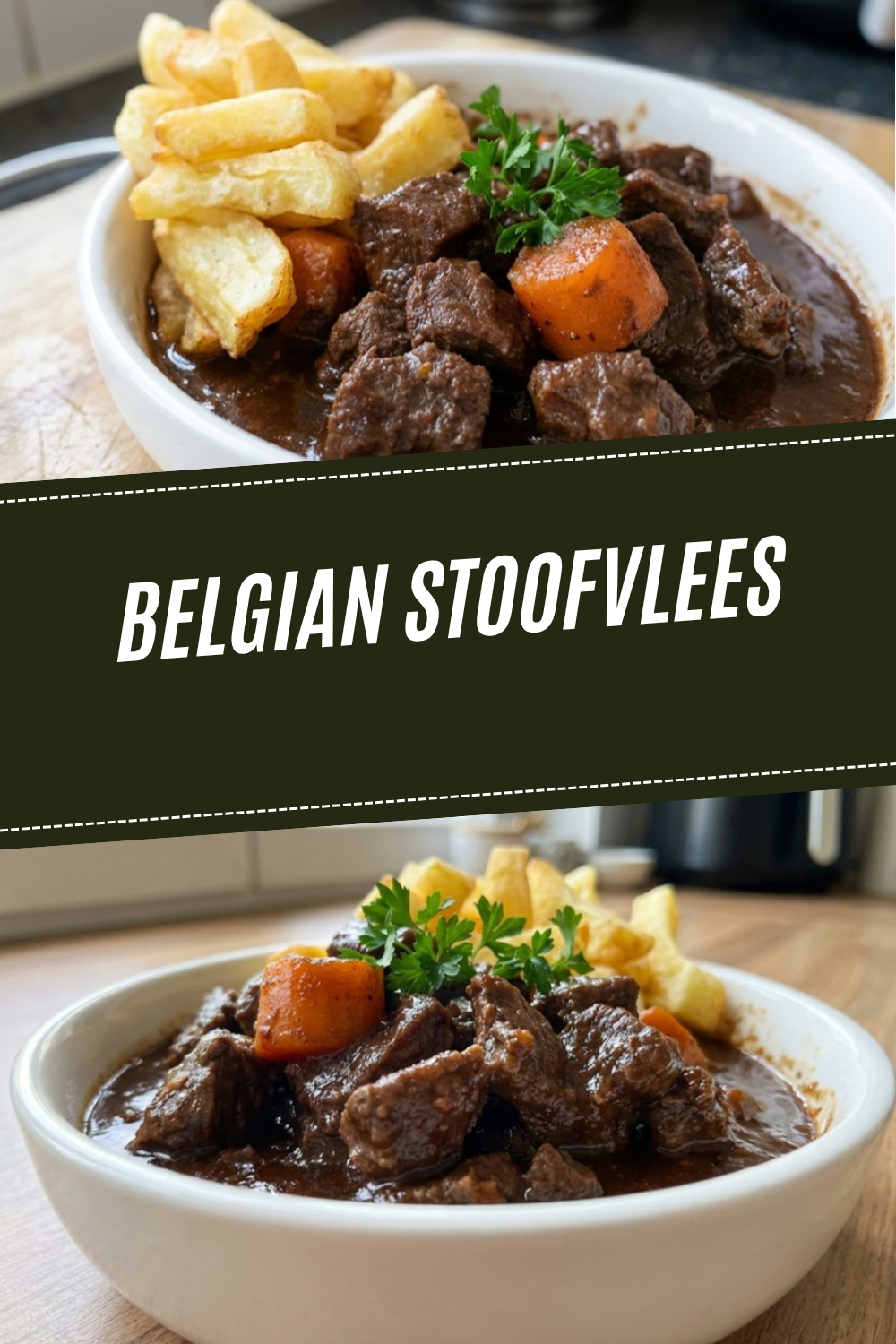
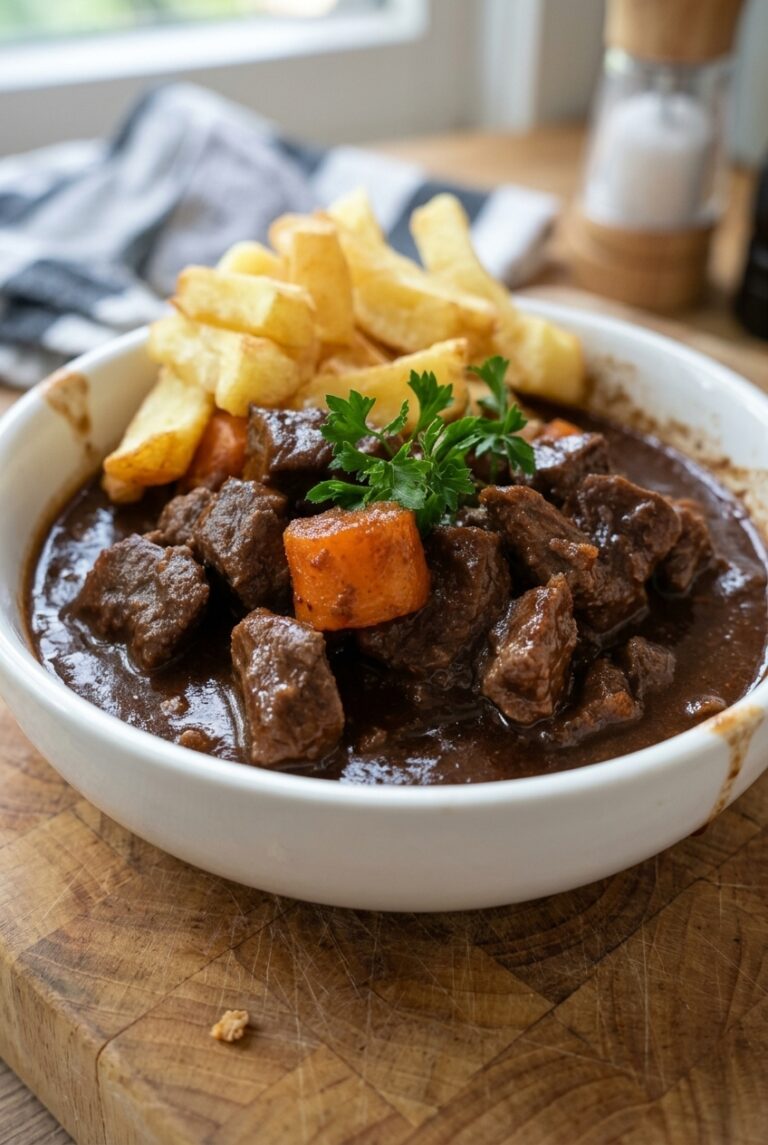
Serve Belgian Stoofvlees with crusty bread and fries. It is also lovely with boiled potatoes or mashed potatoes if that is what you have on hand. Spoon plenty of sauce over the top because that is half the fun.
| Step | Time | What to watch for |
|---|---|---|
| Marinate beef | 4 hours to overnight | Flavor should soak deep into the meat |
| Sear beef | About 3 minutes per batch | Look for brown crust, not gray meat |
| Simmer stew | 4 to 5 hours | Beef should turn fork-tender |
| Add carrots | Last 1 hour | Carrots should stay tender but firm |

Dietary Substitutions to Customize Your Belgian Stoofvlees
Protein and main component alternatives
If you want to tweak this Belgian stoofvlees recipe, the easiest place to start is the protein. Beef chuck is classic because it gets tender after a long simmer, but other cuts can work too if they have enough fat and connective tissue. Lamb can give the stew a stronger flavor, while mushrooms or seitan can work for a meat-free version.
For a budget-friendly version, use a tougher cut that benefits from slow braising. For a lighter version, choose leaner beef and trim visible fat before marinating. The stew will still taste like a proper Flemish stew as long as you keep the beer, mustard, and onion base.
Vegetable, sauce, and seasoning modifications
You can swap the carrot for parsnips, celery root, or extra onions if you want a different texture. If you like a thicker sauce, add a little more flour at the coating stage or let the pot simmer uncovered a bit longer at the end. If you like more sweetness, add a touch more brown sugar. If you like more bite, use a sharper mustard.
For a gluten-free version, use rice flour and a gluten-free beer or nonalcoholic dark malt drink. For a lower-salt version, reduce the added salt and rely more on herbs, onions, and mustard for flavor. If you want the stew richer, a little butter stirred in at the end works nicely.
Mastering Belgian Stoofvlees: Advanced Tips and Variations
Pro cooking techniques
The best stoofvlees flemish recipe starts with good browning. Take your time searing the beef in batches so the meat gets a proper crust. Also, do not skip deglazing because the browned bits in the pot are where a lot of the flavor hides.
Stir the stew every 45 minutes while it simmers. That keeps it from sticking and helps the sauce stay smooth. If you want deeper flavor, cook it for 2 to 3 hours one day, cool it, refrigerate it overnight, and finish the next day. That trick is especially handy for weekend cooking.
Flavor variations
Want a sweeter Belgian beef stew? Add a little more brown sugar or use a darker, maltier beer. Want a sharper edge? Use more mustard and a touch more vinegar. You can also add a few extra herbs if you like a stronger rosemary note.
Some cooks add a slice of rustic bread to thicken the sauce, while others keep it simple and let the flour do the job. Either way, the stew stays comforting and very forgiving.
Presentation tips
Spoon the stew into wide bowls so the sauce can spread out красиво. Top with a little fresh rosemary if you want a rustic look, then serve with fries piled alongside or tucked under the stew. Crusty bread on the side is always welcome because nobody wants to leave any of that sauce behind.
Make-ahead options
For busy weeks, make the whole pot a day ahead and reheat gently before serving. This dish also works well as a batch-cook meal because the flavor keeps improving. If you are feeding a group, make it the day before and spend serving day relaxing instead of babysitting a Dutch oven.
How to Store Belgian Stoofvlees: Best Practices
Belgian Stoofvlees stores very well, which is one reason people love making a big pot. In fact, the flavor often gets better after a rest in the fridge.
- Refrigeration: Cool the stew, then store it in an airtight container in the fridge for up to 4 days.
- Freezing: Freeze portions in airtight containers or freezer bags for up to 3 months.
- Reheating: Warm gently on the stove over low heat with a splash of water, broth, or beer if the sauce is too thick.
- Meal prep: Divide leftovers into single servings so lunches and quick dinners are ready to go.
Try to avoid high heat when reheating, since that can dry out the beef. A slow, gentle warm-up keeps the texture soft and the sauce smooth. This makes Belgian stoofvlees one of the better make-ahead meals for people who want comfort food without much fuss.
FAQs: Frequently Asked Questions About Belgian Stoofvlees
What is Belgian stoofvlees?
Belgian stoofvlees, also known as carbonnade flamande, is a hearty beef stew from Flanders made with tender beef chunks braised in dark Belgian beer, caramelized onions, brown sugar, and mustard. It simmers low and slow for hours, creating a rich, malty gravy thickened by the beer and flour-dusted meat. This classic dish dates back centuries and is a staple in Belgian home cooking and brasserie menus. Serve it hot with fries or boiled potatoes to soak up the sauce. It’s perfect for cold weather, feeding 4-6 people, and leftovers taste even better the next day as flavors meld. Prep takes 20 minutes, cooking 3-4 hours. (78 words)
What ingredients do I need for stoofvlees?
For a traditional stoofvlees serving 4, gather 1.5 lbs beef chuck (cut into 1-inch cubes), 2 large onions (sliced), 2 tbsp flour, 24 oz dark Belgian abbey beer (like Chimay or Leffe Brune), 2 tbsp brown sugar, 1 tbsp Dijon mustard, 2 bay leaves, 2 sprigs thyme, salt, pepper, and 2 tbsp butter or oil. Optional: a slice of pain de mé tier (rustic bread) spread with mustard for thickening. Brown beef first, then layer with onions and deglaze with beer. No stock needed—the beer provides depth. Source quality beer for authentic taste. (92 words)
How do you cook Belgian stoofvlees?
Start by seasoning and flouring beef cubes, then brown in butter over medium-high heat in a Dutch oven (5-7 minutes). Remove beef, sauté onions until golden (10 minutes). Return beef, add sugar, mustard, beer, herbs, and scrape up bits. Bring to simmer, cover, and cook on stovetop low for 3 hours or oven at 300°F. Stir occasionally; add bread slices midway if thicker gravy desired. Beef is done when fork-tender. Total time: 3.5 hours. Cool and refrigerate overnight for best results—reheat gently. Avoid boiling to prevent tough meat. (96 words)
How long does stoofvlees take to cook and can I use a slow cooker?
Traditional stoofvlees cooks 3-4 hours on stovetop or oven for melt-in-mouth beef. For convenience, use a slow cooker: brown meat and onions first (stovetop 15 minutes), transfer to cooker with remaining ingredients on low 8-10 hours or high 4-6 hours. This hands-off method works well for busy days. Check tenderness at 8 hours; extend if needed. Slow cooking intensifies beer flavors without scorching. Freezes up to 3 months. Pro tip: Deglaze pan with beer before transferring to capture all fond for richer sauce. Serves with frites or baguette. (94 words)
What should I serve with stoofvlees and how do I store leftovers?
Pair stoofvlees with Belgian frites (thick-cut fries), creamy mashed potatoes, or crusty bread to mop up gravy. Add a simple green salad or steamed veggies for balance. Beer pairing: same dark ale used in cooking. For dessert, speculoos cookies. Store leftovers in airtight container in fridge up to 4 days; flavors improve. Freeze portions in bags up to 3 months—thaw overnight, reheat on stove with splash of beer or water. Avoid microwave to preserve texture. Reheats yield 2-3 meals easily. Nutrition per serving: ~450 calories, high protein. (92 words)
Belgian Stoofvlees
🍲 Melt-in-mouth stoofvlees beef stew—rich Belgian ale gravy packs protein and deep flavors for ultimate winter warmer.
🥘 Authentic Flemish comfort: low-effort simmer yields tender meat, perfect over fries or bread in 10 hours total.
- Total Time: 10 hours 10 minutes
- Yield: 4 servings
Ingredients
– 1 pound cubed beef
– 1 small minced onion
– 4 minced garlic cloves
– 1 sprig fresh rosemary
– 1/2 teaspoon dried thyme
– 1/2 teaspoon sweet paprika
– 1/2 teaspoon smoked paprika
– 1/2 teaspoon hot paprika
– 1 tablespoon coarse mustard
– 2 tablespoons red or white wine vinegar
– 2 tablespoons all-purpose flour
– 2 tablespoons flavorless cooking oil
– 1 large diced onion
– 1 bottle 30 cl or 12 oz Belgian brown ale
– 1 cup beef broth
– 1 cup water
– 2 dried bay leaves
– 1 tablespoon brown sugar
– 1/4 teaspoon salt
– 1/8 teaspoon ground black pepper
– 1 teaspoon coarse mustard
– 1 large carrot
– 1 minced garlic clove
– 1/2 sprig chopped fresh rosemary
– 1/4 teaspoon olive oil
– A pinch of salt
– A few grinds of black pepper
Instructions
1-First step: marinate the beef Cut the beef into 1-inch cubes, then mix it with the marinade ingredients: 1 small minced onion, 4 minced garlic cloves, 1 sprig fresh rosemary, 1/2 teaspoon dried thyme, 1/2 teaspoon sweet paprika, 1/2 teaspoon smoked paprika, 1/2 teaspoon hot paprika, 1 tablespoon coarse mustard, and 2 tablespoons red or white wine vinegar. Cover the bowl and refrigerate for at least 4 hours, but overnight is best if you want the deepest flavor. This is the part where Belgian Stoofvlees starts to develop that classic rich taste. If you are planning ahead, marinate the beef the night before and keep the rest of your ingredients ready. That makes the actual cooking day feel much easier.
2-Second step: coat the beef Take the beef out of the fridge and mix it with 2 tablespoons all-purpose flour. The flour helps create a fuller sauce later and gives the beef a light coating before searing. This small step is one reason a good stoofvlees recipe turns into a thick, glossy stew instead of a thin soup.
3-Third step: sear the meat in batches Heat 1 tablespoon flavorless cooking oil in a Dutch oven over medium-high heat. Add the beef in batches and sear for about 3 minutes per batch. You want color, not a full cook here. Browning is where the deep flavor starts, so give each side enough space to get a good crust. Do not crowd the pot. If the beef steams instead of browns, your Belgian stoofvlees will taste less rich. When each batch is done, move it to a plate and repeat until all the beef is browned. If the pot looks dry, add the remaining 1 tablespoon oil before the next batch.
4-Fourth step: sauté the onions Add the large diced onion to the pot and cook for 2 to 3 minutes, stirring often. The onion should soften and pick up some of the browned bits at the bottom. That is where a lot of the flavor lives, so keep stirring and scraping gently. This is also a good moment to adjust for your own taste. If you like a sweeter stew, let the onions cook a little longer before adding the beer.
5-Fifth step: deglaze with Belgian brown ale Pour in 1 bottle, which is 30 cl or 12 oz, of Belgian brown ale. Scrape the pot well so all the brown bits come loose into the liquid. This step gives Belgian Stoofvlees its signature sauce. Be careful here because the beer can bubble quickly and sputter a little. Use a wooden spoon to get into every corner of the Dutch oven. Those stuck-on browned bits are not a problem. They are flavor.
6-Sixth step: build the stew base Return the beef to the pot, then add 1 cup beef broth, 1 cup water, 1 tablespoon brown sugar, 1/4 teaspoon salt, 1/8 teaspoon ground black pepper, and 2 dried bay leaves. Stir everything together, bring it to a boil, then lower the heat so the stew simmers gently. Cover the pot and cook on low for 4 to 5 hours, stirring every 45 minutes. If the stew sticks, add a little water and scrape the bottom. That keeps the sauce smooth and saves the flavor from burning. This part of how to make stoofvlees is mostly patience, with a little stirring now and then.
7-Seventh step: cook the carrots separately One hour before serving, heat 1/4 teaspoon olive oil in a skillet. Add 1 large carrot, sliced or diced, along with a pinch of salt and a few grinds of black pepper. Sauté for 3 minutes, then add 1 minced garlic clove and 1/2 sprig chopped fresh rosemary. Cook for 1 more minute. Adding the carrots late is important. It keeps them bright and tender instead of soft and dull. That way your Flemish beef stew has a better texture and a little color on the plate.
8-Eighth step: finish the stew Stir the carrots into the pot along with 1 teaspoon coarse mustard. Cook the stew uncovered for 1 hour, stirring as needed. The sauce will thicken a bit, the carrots will soak up flavor, and the whole pot will smell like a Belgian bistro kitchen. Taste and adjust if needed. If you want more brightness, add a tiny splash of vinegar. If you want more body, let it simmer uncovered a little longer.
9-Final step: serve it hot Serve Belgian Stoofvlees with crusty bread and fries. It is also lovely with boiled potatoes or mashed potatoes if that is what you have on hand. Spoon plenty of sauce over the top because that is half the fun.
Last Step:
Please leave a rating and comment letting us know how you liked this recipe! This helps our business to thrive and continue providing free, high-quality recipes for you.Notes
⏳ Marinate overnight—intensifies flavors for true authentic depth.
🧹 Scrape every browned bit during deglaze; they’re flavor gold.
🥕 Add carrots last hour to keep crisp texture amid tender beef.
- Prep Time: 10 minutes
- Marinating: 4 hours
- Cook Time: 6 hours
- Category: Main Dish
- Method: Stovetop
- Cuisine: Belgian
Nutrition
- Serving Size: 1/4 recipe
- Calories: 550 kcal
- Sugar: 8g
- Sodium: 900mg
- Fat: 30g
- Saturated Fat: 12g
- Unsaturated Fat: 17g
- Trans Fat: 0.5g
- Carbohydrates: 25g
- Fiber: 3g
- Protein: 35g
- Cholesterol: 100mg