Ingredients
1 medium cauliflower the base for cauliflower rice; choose a firm head with tight florets
1 teaspoon olive oil for lightly sautéing the riced cauliflower so it warms through and loses any raw bitterness
1/2 cup chopped scallions adds mild onion flavor and a fresh pop of color when cooked briefly
juice of 1/2 lime brightens the dish and counteracts any bitterness
sea salt to taste; rounds flavors and seasons the rice substitute
freshly ground black pepper to taste; adds a gentle bite
Instructions
1-First Step: Gather and prep Start with 1 medium cauliflower. Remove any outer leaves and cut the cauliflower into large chunks, including the cores. Keep the stem pieces; they help give texture to the riced cauliflower. Pat the pieces completely dry with a clean kitchen towel or paper towels. Making sure the cauliflower is dry will help limit excess moisture when cooking so the final texture stays fluffy.
2-Second Step: Rice it Place cauliflower pieces into a food processor and pulse in short bursts until the pieces break down into rice-sized granules. Work in batches so you do not over-process; too much blending makes the cauliflower mushy. Aim for 10 to 15 quick pulses per batch, checking the texture as you go. If you do not have a food processor, use a box grater and grate the florets on the large holes. Both methods yield about 4 cups of riced cauliflower per medium head.
3-Third Step: Decide raw or cooked use For raw applications, such as a chilled salad or bowls where texture is desired, you can use the riced cauliflower straight away. Pat it dry again if needed. For most side-dish uses or as a rice substitute, cook lightly so it warms through and loses any sharp raw flavor.
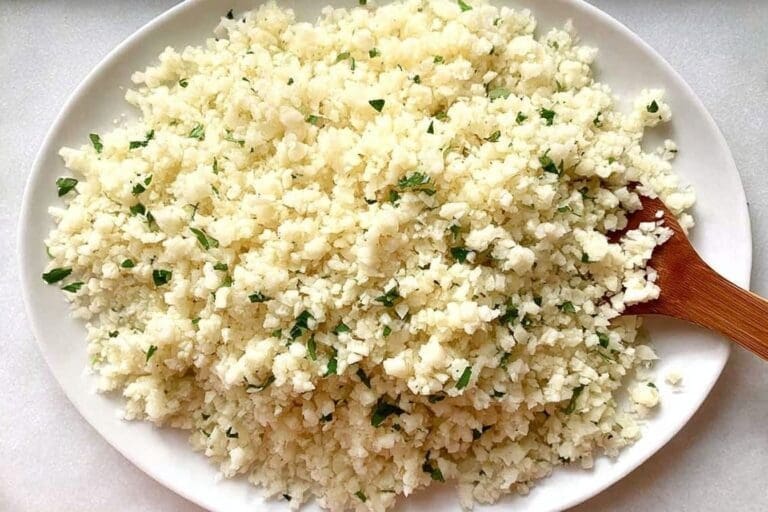
4-Fourth Step: Cooked seasoned cauliflower rice To make a simple, seasoned side:* Warm 1 teaspoon olive oil in a large skillet over medium heat.* Add 1/2 cup chopped scallions and sauté for 30 seconds to 1 minute until fragrant and slightly softened.* Stir in the riced cauliflower and cook for 3 to 5 minutes, stirring frequently, until the cauliflower is warmed and tender-crisp.* Season with sea salt and freshly ground black pepper to taste.* Finish with the juice of 1/2 lime to lift the flavors and cut any lingering raw bitterness. Cooking time is short. Aim for about 3 minutes of direct cooking for a tender-crisp texture. You can cook longer for a softer result, but watch it so it does not turn mushy.
5-Final Step: Serve and adapt Serve the seasoned cauliflower rice as a side with grilled proteins or as the base for bowls. Sprinkle extra scallions, herbs, or a drizzle of soy sauce for Asian-style bowls. If you want to keep things simple, a squeeze of lime and a pinch of sea salt is classic and bright.
Last Step:
Please leave a rating and comment letting us know how you liked this recipe! This helps our business to thrive and continue providing free, high-quality recipes for you.Notes
🥬 Pulse the cauliflower carefully in batches to maintain a fluffy texture and avoid over-processing into mush
🍋 Always add lime juice at the end to brighten the flavor and counter any raw bitterness
❄️ Freeze cooked cauliflower rice for later use in stir-fries or soups, but use fresh for raw applications
- Prep Time: 7 minutes
- Cook Time: 3 minutes
- Category: Side Dish
- Method: Food Processing/Sautéing
- Cuisine: American/Healthy
- Diet: Vegetarian/Vegan/Gluten-Free/Low-Carb
Nutrition
- Serving Size: 1 cup
- Calories: 27 kcal
- Sugar: 2 g
- Sodium: 65 mg
- Fat: 1 g
- Saturated Fat: 0.1 g
- Unsaturated Fat: 0.8 g
- Trans Fat: 0 g
- Carbohydrates: 5 g
- Fiber: 2 g
- Protein: 2 g
- Cholesterol: 0 mg