

Why You’ll Love This Cook Bacon Oven
If you haven’t tried to cook bacon oven-style yet, now is a great time. Cooking bacon in the oven is simple and hands-off, and it gives you consistent, flat, crispy strips with almost no mess. Whether you are feeding a crowd or making a quick breakfast for two, the oven method makes the whole process easier and more predictable.
Ease of preparation
This method is quick: preheat, lay out the strips, and bake. No flipping, no standing over a hot skillet, and no chasing grease splatters. Prep time is about 5 minutes and cook time is 10 to 20 minutes depending on thickness and doneness.
Health benefits
Oven baking lets fat render out evenly into the pan, so you can drain the strips and reduce surface grease. A serving of two slices has about 183 kcal and 6g protein, making bacon a flavorful protein addition in controlled portions. For more on bacon and health, see this health overview.
Versatility
This basic cook bacon oven technique works for breakfast, sandwiches, salads, and as a crunchy garnish. It adapts to thick-cut or regular slices and can be scaled for meal prep or brunch crowds.
Distinctive flavor
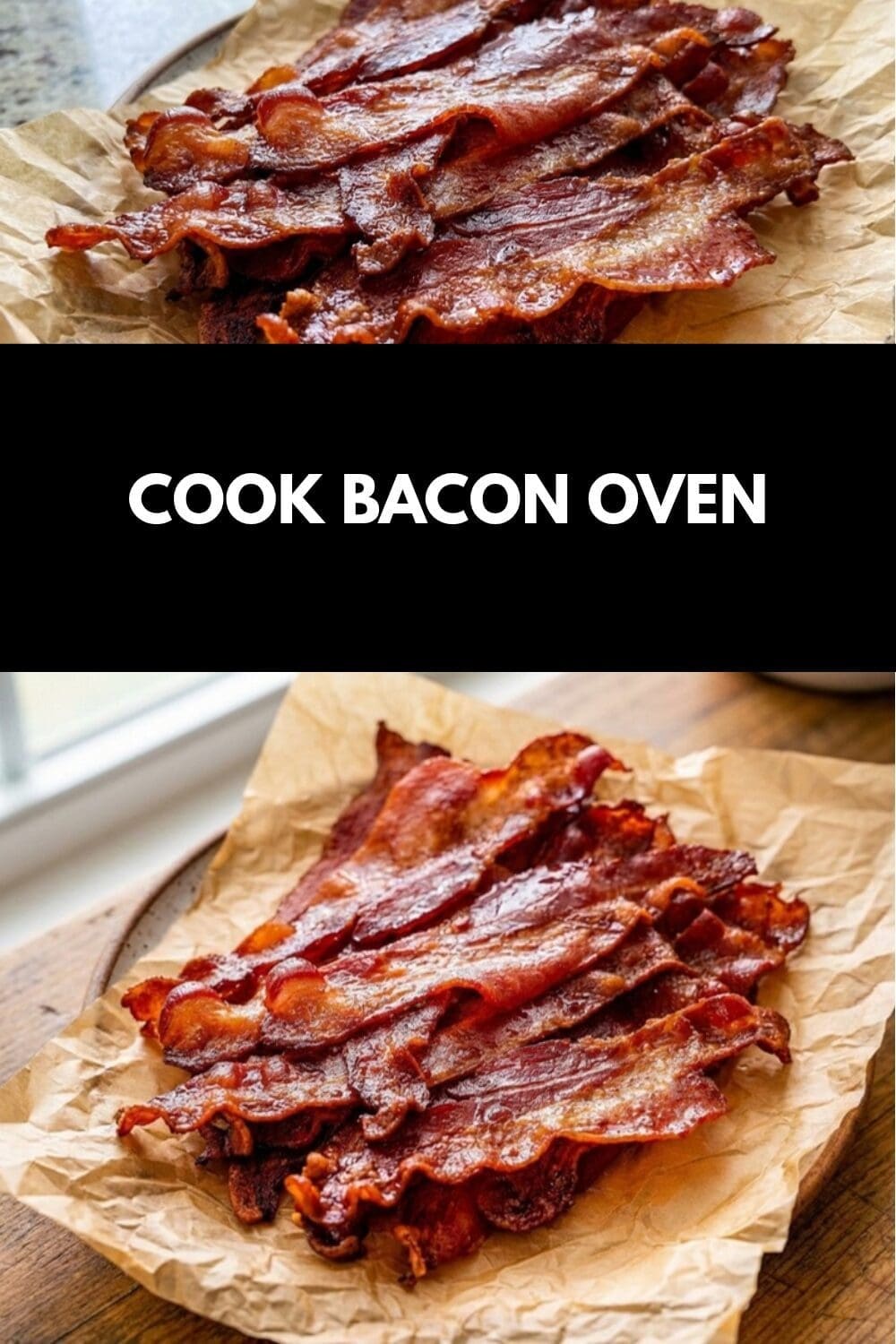
Baking concentrates smoky, salty flavors while keeping strips flat and evenly browned. The result is reliable crispiness and a great texture contrast when used atop salads, bowls, or toast.
Quick tip: since you’re likely juggling other breakfast items, this method frees you up to make eggs, toast, or a salad without hovering over the stove.
Jump to:
- Why You’ll Love This Cook Bacon Oven
- Ease of preparation
- Health benefits
- Versatility
- Distinctive flavor
- Essential Ingredients for Cook Bacon Oven
- How to Prepare the Perfect Cook Bacon Oven: Step-by-Step Guide
- First Step: Prep your tools and oven
- Second Step: Arrange the bacon
- Third Step: Bake and monitor
- Fourth Step: Rotate for even cooking
- Fifth Step: Drain and crisp
- Final Step: Render and save the grease
- Quick timing and prep summary
- Common pitfalls and how to avoid them
- Dietary Substitutions to Customize Your Cook Bacon Oven
- Protein and Main Component Alternatives
- Vegetable, Sauce, and Seasoning Modifications
- Mastering Cook Bacon Oven: Advanced Tips and Variations
- Pro cooking techniques
- Flavor variations
- Presentation tips
- Make-ahead options
- How to Store Cook Bacon Oven: Best Practices
- Refrigeration
- Freezing
- Reheating
- Meal prep considerations
- Nutrition Facts and Recipe Details
- Official Oven-Baked Bacon Directions
- Tips and Tricks for Best Results
- FAQs: Frequently Asked Questions About Cook Bacon Oven
- What temperature and how long to cook bacon in the oven?
- Should I use parchment paper or a rack when baking bacon in the oven?
- How do I save and use bacon grease after oven cooking?
- Why cook bacon in the oven instead of on the stovetop?
- How do I reheat oven-cooked bacon and get it crispy again?
- Cook Bacon Oven
- Ingredients
- Instructions
- Last Step:
- Notes
- Nutrition
- Did you make this recipe?
Essential Ingredients for Cook Bacon Oven
Below is the exact ingredient list for this oven-baked bacon recipe. Each item is shown with its precise measurement and a short note about purpose or benefit.
- 8 bacon slices – Main ingredient; provides smoky flavor and crisp texture when baked.
Special Dietary Options:
- Vegan: Use store-bought plant-based bacon slices as a one-to-one swap; cook according to package directions or bake until crisp.
- Gluten-free: Most plain bacon is naturally gluten-free; check labels for added flavorings or cross-contamination.
- Low-calorie: Choose center-cut or turkey bacon as lower-fat alternatives; adjust cook time since thickness and water content differ.
How to Prepare the Perfect Cook Bacon Oven: Step-by-Step Guide
This step-by-step section walks you from mise en place to serving. Follow the timing and tips for consistent results. Subheadings break the longer section into easy steps.
First Step: Prep your tools and oven
Preheat your oven to 400°F. Choose a large rimmed baking sheet so rendered fat stays contained. Line the sheet with parchment paper for easy cleanup; parchment is optional but highly recommended to minimize sticking and mess.
Second Step: Arrange the bacon
Lay 8 bacon slices side by side on the parchment-lined baking sheet. Do not overlap the slices. Cooking in a single layer helps the bacon crisp evenly. If you need more capacity for a crowd, use two sheets rather than stacking slices on one.
Third Step: Bake and monitor
Place the baking sheet on the middle rack. Bake for 10 to 20 minutes depending on your oven, bacon thickness, and how crispy you like it. Start checking at 10 minutes to avoid overcooking. Regular slices often finish around 12 to 15 minutes, while thick-cut can take 18 to 20 minutes.
Fourth Step: Rotate for even cooking
About halfway through cooking, rotate the pan 180 degrees. Ovens can have hot spots, and rotation helps every slice brown evenly. There is no need to flip the bacon; it cooks evenly on both sides from the oven’s heat.
Fifth Step: Drain and crisp
When the edges are browned and your desired doneness is reached, remove the sheet from the oven. Transfer strips to a paper towel-lined plate to drain. Bacon often crisps up a bit more as it cools, so pull it when it is slightly less done than the final texture you want.
Final Step: Render and save the grease
To save bacon grease, carefully pour the hot fat through a fine-mesh sieve lined with a paper towel into a heat-safe glass jar. Let the grease cool slightly before covering and refrigerating. Stored this way, bacon grease will solidify and can be kept for later use in cooking eggs, vegetables, or for adding flavor to dishes.
Tip: Use glass jars (not plastic) for bacon grease. It stores well in the fridge and adds a quick flavor boost to many recipes.
Quick timing and prep summary
| Task | Time |
|---|---|
| Prep | ~5 minutes |
| Cook | 10-20 minutes (check at 10) |
| Total | ~20-25 minutes |
Common pitfalls and how to avoid them
- Overcrowding the sheet – keeps bacon from crisping. Cook in a single layer only.
- Not checking early enough – ovens vary; check at 10 minutes to avoid burning.
- Using a thin, rimless sheet – choose a rimmed pan to catch grease.

Dietary Substitutions to Customize Your Cook Bacon Oven
This section offers protein swaps and seasoning swaps so you can adapt the recipe to your diet or pantry.
Protein and Main Component Alternatives
If you want a different flavor profile or a lighter option, try one of these swaps.
- Turkey bacon – Lower in fat; bake at 400°F but check sooner since it can dry quickly.
- Thick-cut bacon – For meatier bites; expect cooking closer to 18-20 minutes.
- Plant-based bacon – Use vegan bacon strips and follow package directions or bake until crisp; timing varies by brand.
- Pancetta or prosciutto – For a different cured-pork taste; slices may crisp faster, so watch closely.
Vegetable, Sauce, and Seasoning Modifications
These tweaks change flavor without altering the basic bake method.
- Maple or brown sugar glaze – Brush a light coat on slices at the 8-minute mark for sweet-and-salty candied bacon.
- Black pepper or chili flakes – Sprinkle before baking for heat and aroma.
- Smoked paprika – Adds deeper smoke notes if your bacon is milder.
- Herb finish – Crumble cooled strips over salads with fresh parsley or thyme for a fresher finish.
Mastering Cook Bacon Oven: Advanced Tips and Variations
Once you have the basics down, try these expert tips and creative ideas to make the method even more useful for meal prep and special dishes.
Pro cooking techniques
Use a rimmed sheet and parchment for mess-free cooking. For extra-even crisping, place a second sheet on the rack below to catch spatters without trapping air. If you want bacon flat but with less direct contact with pooled fat, you can raise the bacon slightly by using sturdy oven-safe skewers or a disposable oven-safe rack, but be prepared to clean more pieces afterward.
Flavor variations
Try these seasoning combos:
- Sweet heat: brush with pure maple syrup and sprinkle cayenne.
- Smoky garlic: rub with garlic powder and smoked paprika.
- Maple-mustard: mix 1 teaspoon mustard with 1 tablespoon maple and brush lightly before baking.
Presentation tips
Serve whole slices over a stack of pancakes or cut into lardons to sprinkle on salads and bowls. For sandwiches, layer warm bacon onto toasted bread with a light smear of mayo and fresh greens. For brunch platters, fan slices on a board with fruit and toast points.
Make-ahead options
Bake multiple sheets at once to prep for the week. Cool strips on paper towels, then store airtight in the fridge up to 4 days. Freeze portions between layers of parchment for up to 1 month. Reheat in a 350°F oven for 3-5 minutes to restore crispness.
How to Store Cook Bacon Oven: Best Practices
Good storage keeps cooked bacon tasting fresh and safe. Here are practical steps for refrigeration, freezing, reheating, and meal prep.
Refrigeration
After baking, let the bacon cool to room temperature, then place in an airtight container or wrap tightly in foil. Store in the fridge for up to 4 days. If you saved bacon grease, keep it covered in a glass jar in the refrigerator; it will solidify and last several months.
Freezing
Lay cooled strips flat on a sheet of parchment and freeze until solid. Transfer to a freezer bag with pieces of parchment between layers so you can remove single servings. Freeze for up to 1 month for best quality. Label with date and reheat from frozen in the oven or briefly in the microwave.
Reheating
To bring bacon back to crisp, bake at 350°F for 3-5 minutes on a parchment-lined sheet without overlapping strips. For faster reheating, microwave on a paper towel for 20-30 seconds per slice, though the microwave may yield less crisp texture.
Meal prep considerations
For meal prep, portion cooked strips into meal-sized packs with parchment separators. Use bacon as a quick protein addition to breakfast bowls, salads, and sandwiches. Remember that bacon crisps further as it cools, so plan your timing if serving immediately.
Nutrition Facts and Recipe Details
Here is the official nutritional breakdown per serving (2 slices) and the full recipe directions as provided for this oven-baked bacon method.
| Nutrient | Amount per serving (2 slices) |
|---|---|
| Calories | 183 kcal |
| Carbohydrates | 1 g |
| Protein | 6 g |
| Fat | 17 g |
| Saturated Fat | 6 g |
| Polyunsaturated Fat | 3 g |
| Monounsaturated Fat | 8 g |
| Trans Fat | 0.1 g |
| Cholesterol | 29 mg |
| Sodium | 291 mg |
| Potassium | 87 mg |
| Vitamin A | 16 IU |
| Calcium | 2 mg |
| Iron | 0.2 mg |
Official Oven-Baked Bacon Directions
Ingredients: 8 bacon slices
Directions:
- Preheat oven to 400°F.
- Line a large baking sheet with parchment paper.
- Arrange bacon slices side by side on the baking sheet.
- Bake for 10 to 20 minutes, or until desired crispiness is reached (check at 10 minutes, as oven performance varies).
- Remove from oven and transfer to a paper towel-lined plate to drain.
- To render bacon grease, line a fine-mesh sieve with a paper towel over a glass jar, pour hot grease through, cover, and refrigerate for later use.
Tips and Tricks for Best Results
- Use parchment paper to minimize mess (optional, but bare sheets get messy).
- A cooling rack is unnecessary and harder to clean.
- Rotate pan halfway for even cooking.
- Bacon crisps more after removal from oven.
- Reduce splatter by lightly pressing another parchment sheet on top.
- Store grease in glass jars (not plastic) for cooking eggs, meats, or veggies.
- Reheat in a 350°F oven for 3-5 minutes.
- Cook in a single layer only; avoid stacking even with parchment separators.
- Times vary by oven; check at 10 minutes.
FAQs: Frequently Asked Questions About Cook Bacon Oven
What temperature and how long to cook bacon in the oven?
Preheat your oven to 400°F for cooking bacon. Arrange strips in a single layer on a parchment-lined baking sheet. Bake for 10 to 20 minutes, depending on thickness and desired crispiness—regular bacon often takes 12-15 minutes, while thick-cut may need 18-20. Start checking at 10 minutes since oven performance varies. No flipping required for even cooking. Remove when edges brown and it reaches your preferred doneness; it will crisp more as it cools on paper towels. This method yields flat, evenly cooked bacon without constant attention. Yields about 12-16 strips per standard sheet. (78 words)
Should I use parchment paper or a rack when baking bacon in the oven?
Line your baking sheet with parchment paper—it’s optional but highly recommended for easy cleanup as it catches grease without sticking. Skip the cooling rack; bacon cooks best directly on the sheet for full crispiness and renders fat evenly into the pan. For extra splatter control, lightly press another parchment sheet on top of the bacon before baking—it contains drips while allowing air flow. Always use a rimmed sheet to contain grease. This setup prevents mess and ensures restaurant-quality results. (92 words)
How do I save and use bacon grease after oven cooking?
After baking, carefully pour hot grease through a fine-mesh sieve lined with a paper towel into a heat-safe glass jar. Let it cool, then seal and refrigerate—it solidifies for up to 3 months. Use it as a flavorful fat substitute: fry eggs for crisp edges, sear steaks for smoky taste, sauté vegetables, or make cornbread. One pound of bacon yields about 1/4 cup grease. Strain again before storing to remove bits. This simple step reduces waste and adds rich flavor to everyday cooking. (89 words)
Why cook bacon in the oven instead of on the stovetop?
Oven-baked bacon cooks evenly without flipping, avoids stovetop splatters that mess up your kitchen, and lets you multitask freely—no standing over a greasy pan. At 400°F for 10-20 minutes in a single layer, it comes out flat and crispy every time, even for batches. Stovetop often curls and smokes more. Ovens vary, so check after 10 minutes to prevent burning. Ideal for 1-2 pounds at once. Pair with parchment for zero cleanup. Perfect for meal prep or brunch crowds. (85 words)
How do I reheat oven-cooked bacon and get it crispy again?
Reheat leftover oven-baked bacon in a 350°F oven for 3-5 minutes on a parchment-lined sheet—lay strips flat without overlapping. Microwave works too (20-30 seconds per slice on a paper towel plate), but oven restores crispiness best without sogginess. For thick-cut, add 1-2 minutes. It crisps further as it cools. Store cooked bacon airtight in the fridge up to 4 days or freeze in bags for 1 month. Quick reheat keeps it tasting fresh for sandwiches, salads, or toppings. (82 words)

Cook Bacon Oven
🥓 Perfectly crispy bacon every time with minimal effort and no stovetop splatter
🔥 A foolproof method that frees up your stove space while cooking bacon to your preferred crispiness level
- Total Time: 20-25 minutes
- Yield: 4 servings
Ingredients
– 8 bacon slices Main ingredient; provides smoky flavor and crisp texture when baked
Instructions
1-First Step: Prep your tools and oven Preheat your oven to 400°F. Choose a large rimmed baking sheet so rendered fat stays contained. Line the sheet with parchment paper for easy cleanup; parchment is optional but highly recommended to minimize sticking and mess.
2-Second Step: Arrange the bacon Lay 8 bacon slices side by side on the parchment-lined baking sheet. Do not overlap the slices. Cooking in a single layer helps the bacon crisp evenly. If you need more capacity for a crowd, use two sheets rather than stacking slices on one.
3-Third Step: Bake and monitor Place the baking sheet on the middle rack. Bake for 10 to 20 minutes depending on your oven, bacon thickness, and how crispy you like it. Start checking at 10 minutes to avoid overcooking. Regular slices often finish around 12 to 15 minutes, while thick-cut can take 18 to 20 minutes.
4-Fourth Step: Rotate for even cooking About halfway through cooking, rotate the pan 180 degrees. Ovens can have hot spots, and rotation helps every slice brown evenly. There is no need to flip the bacon; it cooks evenly on both sides from the oven’s heat.
5-Fifth Step: Drain and crisp When the edges are browned and your desired doneness is reached, remove the sheet from the oven. Transfer strips to a paper towel-lined plate to drain. Bacon often crisps up a bit more as it cools, so pull it when it is slightly less done than the final texture you want.
6-Final Step: Render and save the grease To save bacon grease, carefully pour the hot fat through a fine-mesh sieve lined with a paper towel into a heat-safe glass jar. Let the grease cool slightly before covering and refrigerating. Stored this way, bacon grease will solidify and can be kept for later use in cooking eggs, vegetables, or for adding flavor to dishes.
Last Step:
Please leave a rating and comment letting us know how you liked this recipe! This helps our business to thrive and continue providing free, high-quality recipes for you.Notes
📄 Use parchment paper to minimize mess and make cleanup much easier
🔄 Rotate pan halfway through cooking for even browning and crispiness
⏰ Bacon continues to crisp up after removal from oven, so remove slightly before desired crispiness
- Prep Time: 5 minutes
- Cook Time: 10-20 minutes
- Category: Breakfast
- Method: Oven Baked
- Cuisine: American
Nutrition
- Serving Size: 2 slices
- Calories: 183
- Sugar: 0g
- Sodium: 291mg
- Fat: 17g
- Saturated Fat: 6g
- Unsaturated Fat: 11g
- Trans Fat: 0.1g
- Carbohydrates: 1g
- Fiber: 0g
- Protein: 6g
- Cholesterol: 29mg


