

Why You’ll Love This Homemade Stuffing
If you want a reliable, comforting side that comes together with familiar pantry items, this Homemade Stuffing is for you. It balances simple prep with classic flavors, so you get a crowd-pleasing dish without fuss. Read on to see why this recipe earns a regular spot on family tables.
- Ease of preparation: This recipe uses basic steps and common ingredients, and it takes just about 15 minutes to prep and 55 minutes to cook, so you can have warm stuffing on the table in roughly 1 hour 10 minutes. The method is forgiving, making it a great pick for busy weeknights or holiday days when you want a steady, low-stress side.
- Health benefits: At about 185 calories per serving and with modest protein and fiber from bread and vegetables, this Homemade Stuffing provides satisfying energy without heavy portions. The recipe includes fresh herbs and vegetables that add vitamins A and C, and you can trim sodium or saturated fat for a lighter dish.
- Versatility: This bread stuffing adapts to different breads, herbs, and broths. Make it vegetarian by swapping vegetable broth and butter substitutes, or keep it classic with chicken or turkey broth. It also works baked on its own or inside poultry if you prefer.
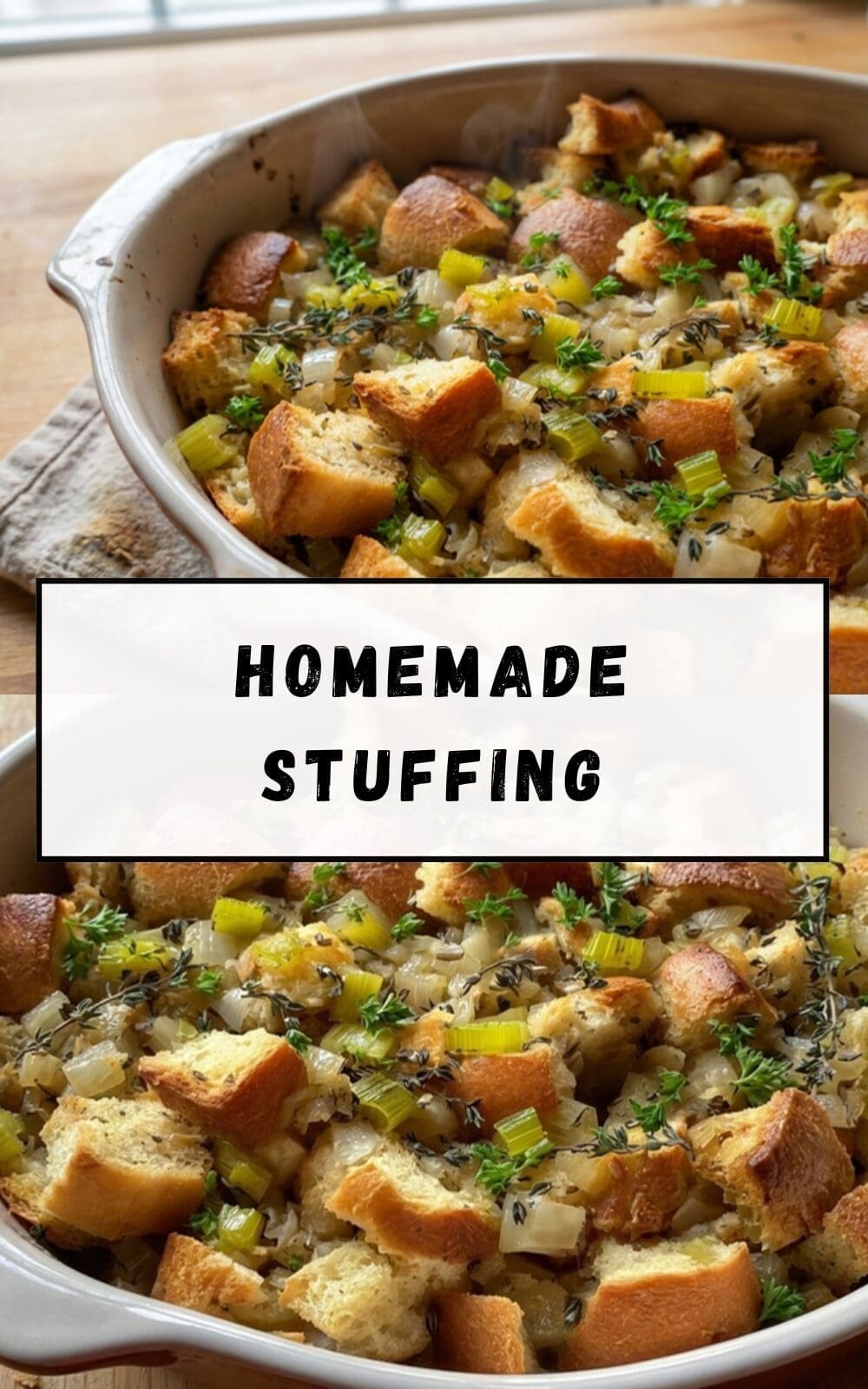
- Distinctive flavor: Sautéing onions and celery in butter with poultry seasoning and fresh herbs builds a savory base that the dry bread absorbs. The result is moist, well-seasoned stuffing with a golden, crisp top when baked.
Jump to:
- Why You’ll Love This Homemade Stuffing
- Essential Ingredients for Homemade Stuffing
- Special Dietary Options
- How to Prepare the Perfect Homemade Stuffing: Step-by-Step Guide
- First Step: Preheat and prep
- Second Step: Cook the vegetable base
- Third Step: Combine bread and aromatics
- Fourth Step: Add broth carefully
- Fifth Step: Transfer to baking dish
- Sixth Step: Bake
- Final Step: Rest and serve
- Dietary Substitutions to Customize Your Homemade Stuffing
- Protein and Main Component Alternatives
- Vegetable, Sauce, and Seasoning Modifications
- Mastering Homemade Stuffing: Advanced Tips and Variations
- Pro cooking techniques
- Flavor variations
- Presentation tips
- Make-ahead options
- How to Store Homemade Stuffing: Best Practices
- Refrigeration
- Freezing
- Reheating
- Meal prep considerations
- FAQs: Frequently Asked Questions About Homemade Stuffing
- Can I bake homemade stuffing in a round or oval casserole dish?
- Do homemade stuffing recipes use conventional or convection oven temperatures?
- Can you stuff a turkey with homemade stuffing?
- Can I make homemade stuffing ahead of time?
- Can homemade stuffing be frozen, and how?
- Homemade Stuffing
- Ingredients
- Instructions
- Last Step:
- Notes
- Nutrition
- Did you make this recipe?
Essential Ingredients for Homemade Stuffing
This ingredients section is presented as a structured list for clarity. Each line shows the exact measurement followed by the ingredient. After the main list you’ll find easy special-diet swaps.
- 2 small yellow onions, diced – adds sweetness and savory depth when sautéed
- 4 ribs celery, diced – provides texture and classic stuffing flavor
- 2/3 cup butter – used to sauté vegetables and add rich mouthfeel
- 1 1/2 teaspoons poultry seasoning (or 1/2 teaspoon ground sage) – gives the mixture its traditional herb profile
- Black pepper to taste – balances and brightens flavors
- Salt to taste – enhances overall seasoning
- 12 cups dry bread cubes – the main body of the stuffing; dry cubes absorb broth without becoming mushy
- 2 to 4 cups chicken or turkey broth – hydrates the bread; amount depends on how dry the bread is
- 2 tablespoons chopped fresh parsley (or 2 teaspoons dried parsley) – adds fresh color and subtle herbal note
- 1 tablespoon fresh herbs (sage, thyme, rosemary) (or 1 teaspoon dried herbs) – primary fresh herb mix for aroma and depth
Special Dietary Options
- Vegan: Replace butter with 2/3 cup plant-based margarine or olive oil and use vegetable broth instead of chicken or turkey broth.
- Gluten-free: Use 12 cups of gluten-free bread cubes or a mix of gluten-free rolls, dried the same way as regular bread.
- Low-calorie: Reduce butter to 1/4 cup and use low-sodium broth; consider adding extra diced vegetables to increase volume without many calories.
How to Prepare the Perfect Homemade Stuffing: Step-by-Step Guide
This step-by-step section walks you through the recipe in clear, actionable steps. Timing and temperatures are included so you can follow along easily.
First Step: Preheat and prep
Preheat your oven to 350°F. Gather and measure all ingredients so nothing is left to scramble for later. Dice 2 small yellow onions and 4 ribs of celery; measure 2/3 cup butter, poultry seasoning, and herbs. If your bread cubes are not dry, plan to use the lower end of broth and adjust while mixing.
Second Step: Cook the vegetable base
In a skillet over medium heat, add 2/3 cup butter. When melted, add the diced onions and celery plus 1 1/2 teaspoons poultry seasoning. If you prefer ground sage, use 1/2 teaspoon instead of poultry seasoning. Add a portion of the fresh herbs or rosemary if using. Cook on medium-low until tender, about 10 to 12 minutes, stirring occasionally so vegetables soften but do not brown. Let the mixture cool slightly before combining with the bread.
Third Step: Combine bread and aromatics
Place 12 cups of dry bread cubes into a large mixing bowl. Add the cooked vegetables, 2 tablespoons chopped fresh parsley (or 2 teaspoons dried parsley), and 1 tablespoon fresh herbs or 1 teaspoon dried herbs. Gently toss the mixture so the bread is evenly coated with the aromatic vegetables and herbs.
Fourth Step: Add broth carefully
Gradually pour 2 to 4 cups of chicken or turkey broth over the bread mixture while tossing gently. Add just enough broth to moisten the bread but avoid making it soggy. The exact amount depends on how dry your bread is; drier bread needs more liquid. Season with salt and black pepper to taste. Toss again to distribute seasoning evenly.
Fifth Step: Transfer to baking dish
Transfer the moistened bread mixture to a 3- to 3.5-quart baking dish. Dot the top with extra butter if desired for richer browning. Lightly cover the dish with foil or a lid to keep moisture in for the initial bake.
Sixth Step: Bake
Bake covered at 350°F for 35 minutes. After 35 minutes, remove the cover and bake an additional 10 minutes until the top is golden and crisp. The total baking time is about 45 minutes. If you are baking inside a turkey, follow safety guidance for internal temperatures; the stuffing center should reach 165°F.
Final Step: Rest and serve
Let the stuffing rest for 5 minutes to set slightly before spooning onto plates. Garnish with a sprinkle of fresh parsley if you like. Serve hot alongside roast poultry, or as a standalone side with a green salad.
| Nutritional Information (per serving) | Amount |
|---|---|
| Calories | 185 |
| Carbohydrates | 16g |
| Protein | 3g |
| Fat | 11g (6g saturated) |
| Cholesterol | 27mg |
| Sodium | 462mg |
| Potassium | 175mg |
| Fiber | 1g |
| Sugar | 2g |
| Vitamin A | 435 IU |
| Vitamin C | 6.8 mg |
| Calcium | 61 mg |
| Iron | 1.4 mg |
Tip: If you want a deeper herb aroma, finely chop the fresh sage, thyme, and rosemary and add half to the vegetable mixture and half to the bread so the flavor is layered throughout.

Dietary Substitutions to Customize Your Homemade Stuffing
Protein and Main Component Alternatives
Stuffing is flexible. While this classic recipe focuses on bread and aromatics, you can add or swap proteins and bulk components based on your preferences.
- Cooked sausage or bacon: Brown and drain 8 ounces of sausage or 4 slices of bacon, then mix in with the sautéed onions and celery for a smoky, savory variation.
- Plant-based protein: Use browned crumbled tempeh or a plant-based sausage to keep the dish vegetarian-friendly while adding texture.
- Nuts and fruit: Add 1/2 cup toasted walnuts or pecans and 1/2 cup dried cranberries for crunch and sweet-tart contrast.
- Grain swap: Replace up to half the bread with cooked wild rice or quinoa for a heartier, more protein-rich stuffing.
Vegetable, Sauce, and Seasoning Modifications
Changing vegetables or seasonings helps you tailor the stuffing to seasonal produce and personal taste.
- Autumn vegetables: Fold in 1 cup of roasted butternut squash or diced apples for sweetness and color.
- Herb shifts: Swap rosemary for more thyme or sage, or use a tablespoon of chopped fresh tarragon for a brighter finish.
- Sauces and broths: Use low-sodium chicken broth, turkey broth, or vegetable broth depending on diet. For extra richness, replace 1/2 cup of broth with white wine before adding to the bread.
- Spice additions: Add a pinch of nutmeg or a 1/4 teaspoon of smoked paprika for subtle warmth and complexity.
Mastering Homemade Stuffing: Advanced Tips and Variations
Once you are comfortable with the base recipe, these techniques and variations will help you make the best Homemade Stuffing every time.
Pro cooking techniques
- Dry bread evenly: Cut bread into cubes and leave out at room temperature for 2 to 3 days, or bake at 300°F for about 10 minutes without browning to speed the process. Even dryness helps the bread absorb broth uniformly.
- Control moisture: Add broth in small amounts and toss gently. Too much liquid makes soggy stuffing, while too little leaves dry pockets. Aim for moist but not wet.
- Use a thermometer: When stuffing a turkey or testing a hot casserole, the internal temperature should reach 165°F for food safety.
Flavor variations
- Apple and sausage stuffing: Add 1 cup diced tart apple and 8 ounces of cooked, crumbled sausage for a sweet-savory profile.
- Herb-forward: Double the fresh herbs and skip poultry seasoning for a vibrant, green herb taste.
- Nutty and fruity: Stir in toasted walnuts and dried cherries for texture and bright notes.
Presentation tips
- Serve in a warm shallow bowl and sprinkle chopped parsley or a few fresh thyme leaves on top for color.
- For a rustic look, bake in a cast-iron skillet and bring it directly to the table.
- Portion into ramekins for individual servings at a dinner party.
Make-ahead options
Prepare this stuffing up to 2 days ahead without baking. Combine everything, cover, and refrigerate. Before baking, let sit at room temperature for 30 minutes to take off the chill, then add about 10 to 15 extra minutes to the bake time at 350°F. If you need to freeze, place the unbaked mixture into freezer-safe containers for up to 4 months. Thaw overnight in the fridge before baking.
Looking for a savory use for leftover stuffing or bird trimmings? Try making a simple stock from the turkey carcass and turn leftover stuffing into a hearty soup the next day. For a good turkey stock base, check this recipe for making stock from a roasted carcass at our site: Turkey Carcass Soup for Savory Broth.
How to Store Homemade Stuffing: Best Practices
Proper storage keeps your stuffing safe and tasty for later use. Below are the recommended steps for refrigeration, freezing, and reheating.
Refrigeration
Place cooled stuffing in an airtight container and refrigerate for up to 2 days. If you prepared the stuffing ahead but did not bake it, label with the date and plan to bake within this window. When ready to bake, let the dish sit out 30 minutes to lose refrigeration chill before placing in a 350°F oven and adding 10 to 15 extra minutes to bake time.
Freezing
Freeze unbaked stuffing for up to 4 months. Cool completely, then portion into freezer bags or airtight containers and remove as much air as possible. Thaw overnight in the refrigerator before baking. If you prefer to freeze already baked stuffing, wrap the dish tightly and freeze; reheat in the oven at 350°F until warmed through.
Reheating
Reheat stuffing in a 350°F oven for 15 to 20 minutes for thawed, unbaked portion, or 25 to 30 minutes for refrigerated baked leftovers until the center reaches 165°F. Stirring halfway through helps heat evenly. For small portions, microwave on medium power, stirring once, then finish in the oven to crisp the top if desired.
Meal prep considerations
- Make a double batch and freeze half for later holidays or busy nights.
- Store serving-size portions for fast weeknight sides.
- Label containers with contents and date to track freshness.
FAQs: Frequently Asked Questions About Homemade Stuffing
Can I bake homemade stuffing in a round or oval casserole dish?
Yes, round or oval casserole dishes work great for baking homemade stuffing. Choose one that’s 3 to 3.5 quarts to fit the recipe perfectly without overcrowding. This size ensures even cooking and a nice crispy top. If your dish is slightly smaller, bake in two batches to avoid soggy results. Grease the dish lightly with butter or oil before adding the stuffing mixture. Bake as directed, typically at 350°F for 30-40 minutes until golden and heated through. For best results, cover with foil for the first 20 minutes, then uncover to crisp the edges. This flexibility makes it easy to use what you have on hand.
Do homemade stuffing recipes use conventional or convection oven temperatures?
Homemade stuffing recipes list temperatures for a conventional oven, such as 350°F for baking. If using a fan-forced or convection oven, lower the temperature by 25°F (about 15°C) or keep it the same and reduce cooking time by 10 minutes. Check doneness by inserting a thermometer into the center—it should reach 165°F for safety. Convection ovens circulate hot air for even browning, so watch closely to prevent overcooking the edges. Always preheat fully, and place the dish in the center rack. This adjustment helps achieve that perfect crispy top without drying out the inside.
Can you stuff a turkey with homemade stuffing?
Yes, you can safely stuff a turkey with homemade stuffing, but follow food safety steps. Cool the stuffing in the fridge for at least 45 minutes first to avoid bacterial growth. Stuff the turkey loosely just before roasting—don’t pack it tightly. Roast until the turkey’s thickest part reaches 165°F and the stuffing center hits 165°F too, using a food thermometer. This usually takes 3-4 hours for a 12-15 lb bird at 325°F. Remove stuffing immediately after roasting and serve. For easier serving, bake stuffing separately in a dish. Loose stuffing cooks evenly and stays moist.
Can I make homemade stuffing ahead of time?
Absolutely, prepare homemade stuffing up to 2 days ahead without baking. Mix all ingredients, cover tightly, and refrigerate. Let it sit out for 30 minutes before baking to take off the chill, then add 10-15 extra minutes to the bake time at 350°F until it reaches 165°F internally. This method saves time on holidays. For best texture, don’t assemble too early—dry bread absorbs flavors best fresh. Label the container with the date. If baking from cold, cover with foil initially to prevent drying, then uncover for crispiness. It’s a crowd-pleaser that tastes just as good, if not better, after resting.
Can homemade stuffing be frozen, and how?
Yes, freeze homemade stuffing for up to 4 months. Prepare without baking, cool completely, portion into freezer bags or containers, and squeeze out air. Thaw overnight in the fridge or use the microwave on defrost. Transfer to a greased casserole dish and bake at 350°F for 15-20 minutes until hot (165°F center) and edges are crisp—stir halfway if needed. For baked stuffing, freeze in the dish covered tightly. This works for leftovers too. Avoid refreezing thawed stuffing. Freezing preserves flavor and texture, making it ideal for holiday prep. Label with date for easy tracking.

Homemade Stuffing
🍞 Quick and easy stuffing that saves time without sacrificing flavor
🦃 Perfect holiday side dish ready in minutes for stress-free entertaining
- Total Time: 1 hour 10 minutes
- Yield: 8 servings
Ingredients
– 2 small yellow onions, diced adds sweetness and savory depth when sautéed
– 4 ribs celery, diced provides texture and classic stuffing flavor
– 2/3 cup butter used to sauté vegetables and add rich mouthfeel
– 1 1/2 teaspoons poultry seasoning (or 1/2 teaspoon ground sage) gives the mixture its traditional herb profile
– Black pepper to taste balances and brightens flavors
– Salt to taste enhances overall seasoning
– 12 cups dry bread cubes the main body of the stuffing; dry cubes absorb broth without becoming mushy
– 2 to 4 cups chicken or turkey broth hydrates the bread; amount depends on how dry the bread is
– 2 tablespoons chopped fresh parsley (or 2 teaspoons dried parsley) adds fresh color and subtle herbal note
– 1 tablespoon fresh herbs (sage, thyme, rosemary) (or 1 teaspoon dried herbs) primary fresh herb mix for aroma and depth
Instructions
1-First Step: Preheat and prep – Preheat your oven to 350°F. Gather and measure all ingredients so nothing is left to scramble for later. Dice 2 small yellow onions and 4 ribs of celery; measure 2/3 cup butter, poultry seasoning, and herbs. If your bread cubes are not dry, plan to use the lower end of broth and adjust while mixing.
2-Second Step: Cook the vegetable base – In a skillet over medium heat, add 2/3 cup butter. When melted, add the diced onions and celery plus 1 1/2 teaspoons poultry seasoning. If you prefer ground sage, use 1/2 teaspoon instead of poultry seasoning. Add a portion of the fresh herbs or rosemary if using. Cook on medium-low until tender, about 10 to 12 minutes, stirring occasionally so vegetables soften but do not brown. Let the mixture cool slightly before combining with the bread.
3-Third Step: Combine bread and aromatics – Place 12 cups of dry bread cubes into a large mixing bowl. Add the cooked vegetables, 2 tablespoons chopped fresh parsley (or 2 teaspoons dried parsley), and 1 tablespoon fresh herbs or 1 teaspoon dried herbs. Gently toss the mixture so the bread is evenly coated with the aromatic vegetables and herbs.
4-Fourth Step: Add broth carefully – Gradually pour 2 to 4 cups of chicken or turkey broth over the bread mixture while tossing gently. Add just enough broth to moisten the bread but avoid making it soggy. The exact amount depends on how dry your bread is; drier bread needs more liquid. Season with salt and black pepper to taste. Toss again to distribute seasoning evenly.
5-Fifth Step: Transfer to baking dish – Transfer the moistened bread mixture to a 3- to 3.5-quart baking dish. Dot the top with extra butter if desired for richer browning. Lightly cover the dish with foil or a lid to keep moisture in for the initial bake.
6-Sixth Step: Bake – Bake covered at 350°F for 35 minutes. After 35 minutes, remove the cover and bake an additional 10 minutes until the top is golden and crisp. The total baking time is about 45 minutes. If you are baking inside a turkey, follow safety guidance for internal temperatures; the stuffing center should reach 165°F.
7-Final Step: Rest and serve – Let the stuffing rest for 5 minutes to set slightly before spooning onto plates. Garnish with a sprinkle of fresh parsley if you like. Serve hot alongside roast poultry, or as a standalone side with a green salad.
Last Step:
Please leave a rating and comment letting us know how you liked this recipe! This helps our business to thrive and continue providing free, high-quality recipes for you.Notes
🍞 Dry fresh bread by cubing and leaving out for 2-3 days or baking at 300°F for 10 minutes without browning
🧊 Make ahead: prepare without baking, refrigerate up to 2 days, let sit 30 minutes before baking with extra time
🌡️ Bake separately from turkey for even cooking and safety (165°F internal temp if stuffing turkey)
- Prep Time: 15 minutes
- Cook Time: 55 minutes
- Category: Side Dish
- Method: Baking
- Cuisine: American
Nutrition
- Serving Size: 1 serving
- Calories: 185
- Sugar: 2g
- Sodium: 462mg
- Fat: 11g
- Saturated Fat: 6g
- Unsaturated Fat: 5g
- Trans Fat: 0g
- Carbohydrates: 16g
- Fiber: 1g
- Protein: 3g
- Cholesterol: 27mg


