

Why You’ll Love This Moroccan Chebakia
Moroccan Chebakia stands out as a delightful treat that brings the flavors of Ramadan to your kitchen, making it a favorite for home cooks and food enthusiasts alike. This deep-fried cookie, soaked in honey and topped with toasted sesame seeds, offers a sweet and crispy bite that’s perfect for special occasions. With its simple preparation process, you can create a large batch of about 2 kilograms, which is ideal for sharing with family and friends during Iftar.
One key benefit is the ease of preparation, allowing even busy parents and baking enthusiasts to handle the steps without much hassle. The total time is around 1 hour and 45 minutes, including prep, cooking, and resting, so it’s manageable for anyone with a bit of time. Plus, the recipe uses everyday ingredients that you might already have, making it accessible for students or working professionals looking for a rewarding project.
- Ease of preparation: Moroccan Chebakia comes together with straightforward steps that anyone can follow, from toasting sesame seeds to shaping the dough into flowers. This simplicity means you won’t need advanced skills, and the quick cooking time of about 45 minutes keeps things light for hot weather survivors who prefer not to heat up the kitchen too much. It’s a great way to enjoy traditional flavors without the stress, especially if you’re new to making these cookies.
- Health benefits: While Moroccan Chebakia is calorie-dense due to frying and honey, it includes nutritious elements like sesame seeds that provide healthy fats and protein. These seeds add a nutty flavor and support general wellness, appealing to diet-conscious individuals who appreciate the balance of indulgence and nutrition. Remember, ingredients like anise and cinnamon not only enhance taste but may also offer subtle digestive benefits, making it a thoughtful choice for health-focused eaters.
- Versatility: This recipe adapts well to various needs, such as scaling down for smaller households or modifying for dietary preferences, which is perfect for travelers and seniors. You can experiment with shapes or adjust sweetness, ensuring it’s versatile for different occasions beyond Ramadan. For those on the go, like college students, the large yield means leftovers can be stored easily, adding to its everyday appeal.
- Distinctive flavor: What really sets Moroccan Chebakia apart is its unique blend of spices like anise, cinnamon, and saffron, combined with the sweetness of honey and the crunch of sesame seeds. This creates a memorable taste that’s both exotic and comforting, ideal for food enthusiasts seeking something special. It’s a treat that evokes cultural traditions while fitting into modern no-cook or assembly-style meal routines on your blog, like preparing components ahead for quick assembly.
As you dive into making Moroccan Chebakia, you’ll find it brings a sense of joy and community, much like other simple desserts. For more ideas on easy treats, check out our Peach Cobbler Dump Cake recipe for another fuss-free option.
Jump to:
- Why You’ll Love This Moroccan Chebakia
- Essential Ingredients for Moroccan Chebakia
- Main Ingredients
- Special Dietary Options
- How to Prepare the Perfect Moroccan Chebakia: Step-by-Step Guide
- Preparation and Mise en Place
- Mixing the Dough
- Shaping and Frying
- Soaking and Finishing
- Dietary Substitutions to Customize Your Moroccan Chebakia
- Protein and Main Component Alternatives
- Vegetable, Sauce, and Seasoning Modifications
- Mastering Moroccan Chebakia: Advanced Tips and Variations
- How to Store Moroccan Chebakia: Best Practices
- FAQs: Frequently Asked Questions About Moroccan Chebakia
- What is Moroccan chebakia?
- How much chebakia does one recipe make?
- How do you shape chebakia dough?
- How do you fry and soak chebakia?
- How do you prepare sesame seeds for chebakia and how long does it last?
- Moroccan Chebakia
- Ingredients
- Instructions
- Last Step:
- Notes
- Nutrition
- Did you make this recipe?
Essential Ingredients for Moroccan Chebakia
Moroccan Chebakia relies on a mix of precise ingredients that create its signature flavor and texture. Below is a comprehensive list of everything you’ll need, with exact measurements and explanations for each to help you understand their role in the recipe.
Main Ingredients
- 1/2 kilogram (about 4 cups) flour, plus extra if needed – This forms the base of the dough, providing structure and helping achieve a stiff yet pliable texture that’s easy to shape.
- 1 soup bowl full (approximately 200 grams or 7 ounces) of golden unhulled sesame seeds, toasted – These add a nutty crunch and healthy fats; toasting enhances their flavor, making them essential for both the dough and decoration.
- 1 teaspoon ground anise – Adds a licorice-like warmth that complements the other spices and gives Moroccan Chebakia its distinctive aromatic profile.
- 1 teaspoon ground cinnamon – Brings a sweet, spicy note that balances the honey’s sweetness and adds depth to the overall taste.
- 1/2 teaspoon salt – Enhances all the flavors in the dough and helps with the yeast’s activation for better rising.
- 1/2 teaspoon crumbled saffron threads – Provides a subtle earthy flavor and vibrant color, contributing to the traditional appeal of Moroccan Chebakia.
- 1/4 teaspoon Moroccan yellow colorant – This gives the dough a bright hue, mimicking authentic recipes and making the cookies visually appealing.
- Pinch of Gum Arabic grains mixed with 1/4 teaspoon sugar and crushed into powder – Acts as a binder and adds a slight gloss, improving the dough’s elasticity and final texture.
- 1 extra-large egg – Helps bind the ingredients together, adding richness and contributing to the dough’s pliability.
- 1/4 cup melted butter – Provides moisture and a creamy flavor, making the dough easier to work with and more flavorful.
- 1/4 cup olive oil – Adds healthy fats and helps keep the cookies crisp after frying, while enhancing the overall taste.
- 1/4 cup vinegar – Introduces acidity that reacts with the yeast for better rising and adds a subtle tang to balance the sweetness.
- 1/4 cup orange flower water – Infuses a floral essence that is key to the authentic Moroccan flavor of Chebakia, used in both dough and honey.
- 2 teaspoons yeast dissolved in 1/4 cup warm water – Acts as a leavening agent to make the dough light and airy, ensuring the cookies puff up nicely.
- 1.5 kilograms (about 3 pounds) honey – Soaks the fried cookies for sweetness and a glossy finish, with the option to adjust for desired texture.
- 2 tablespoons orange flower water (for the honey) – Enhances the honey syrup with additional floral notes, making the soaking process more flavorful.
- 1.5 liters vegetable oil for frying – Used to deep-fry the cookies, creating their crispy exterior while keeping them golden brown.
- 1/2 cup toasted golden unhulled sesame seeds for decoration – Sprinkled on top for added crunch and visual appeal, tying together the final presentation.
Special Dietary Options
- Vegan: Substitute the egg with a flaxseed mixture (1 tablespoon ground flaxseed mixed with 3 tablespoons water) and use a vegan butter alternative to keep the dough pliable while maintaining the recipe’s integrity.
- Gluten-free: Replace the flour with a gluten-free blend, adding extra xanthan gum if needed, to ensure the dough holds its shape and achieves the traditional texture.
- Low-calorie: Opt for a lighter honey alternative like a diluted agave syrup and reduce oil absorption by baking instead of frying, though this alters the classic crispiness.
How to Prepare the Perfect Moroccan Chebakia: Step-by-Step Guide
Preparation and Mise en Place
First Step: Gather and measure all ingredients, including 1/2 kilogram of flour, toasted sesame seeds, and spices, to ensure everything is ready for smooth preparation of Moroccan Chebakia.
Second Step: Toast the sesame seeds by spreading them on a baking sheet and baking at 400°F for 10-15 minutes until they turn golden and develop a nutty flavor; let them cool completely before proceeding.
Third Step: Grind one bowlful of the toasted sesame seeds in a food processor until it forms a moist powder, which will be mixed into the dough for added texture and taste in your Moroccan Chebakia.
Mixing the Dough
Fourth Step: In a large bowl, combine the ground sesame powder with the flour, ground anise, cinnamon, salt, saffron, yellow colorant, and the Gum Arabic mixture to create the dry base for your dough.
Fifth Step: Add the wet ingredients egg, melted butter, olive oil, vinegar, orange flower water, and the yeast dissolved in warm water mixing by hand until it forms a stiff yet pliable dough; knead for 7-8 minutes by hand or 4-5 minutes with a mixer, adding more flour if the dough feels too sticky.
Shaping and Frying
Sixth Step: Divide the dough into four portions, shape each into a mound, and let them rest in plastic bags for 10-15 minutes to make rolling easier and ensure the Moroccan Chebakia shapes hold well.
Seventh Step: Roll out each portion to the thickness of thin cardboard, cut into palm-sized rectangles, and make four lengthwise cuts without going through the edges to form five attached strips for shaping.
Eighth Step: Weave the strips by threading alternating ones to create an elongated flower shape, pinching the ends to secure, then place them on baking sheets for frying preparation.
Ninth Step: Heat 1 inch of vegetable oil in a pot to medium heat and fry the shaped Chebakia in batches for about 10 minutes until they turn medium brown, adjusting the heat to avoid burning or undercooking; this step yields the crispy texture.
Soaking and Finishing
Tenth Step: While frying, heat the honey with 2 tablespoons of orange flower water until it’s frothy but not boiling, then drain the fried cookies briefly before soaking them in the hot honey for 5-7 minutes, adjusting time for desired sweetness.
Eleventh Step: Remove the soaked cookies from the honey, arrange them on trays, and sprinkle the centers with the remaining toasted sesame seeds for decoration; repeat with the rest of the dough batches.
Final Step: Allow the Moroccan Chebakia to cool fully before serving, pairing them with mint tea or as part of Iftar, and note that this recipe makes about 2 kilograms, perfect for sharing or storing for later enjoyment.

Dietary Substitutions to Customize Your Moroccan Chebakia
Protein and Main Component Alternatives
For those with dietary needs, swapping out main elements in Moroccan Chebakia can keep it enjoyable. If eggs are a concern, use a flaxseed egg as a binder to maintain dough consistency while keeping things vegan-friendly.
Another option is to replace butter with coconut oil for a dairy-free version, which adds a subtle tropical twist without altering the overall flavor profile much. These changes make the recipe adaptable for various preferences, ensuring everyone can enjoy this traditional treat.
Vegetable, Sauce, and Seasoning Modifications
When it comes to vegetables or add-ins, though Moroccan Chebakia doesn’t use many, you can experiment with seasonings like swapping anise for fennel to vary the spice level. For the honey sauce, use maple syrup as a substitute to reduce calories and create a different sweetness.
Adjust saffron with turmeric for color if availability is an issue, providing a similar visual effect while catering to budget-conscious cooks. These tweaks help make Moroccan Chebakia suitable for different diets, from low-sugar to allergen-free options.
Mastering Moroccan Chebakia: Advanced Tips and Variations
To elevate your Moroccan Chebakia game, focus on pro cooking techniques like monitoring oil temperature closely to achieve the perfect golden brown without burning. This ensures each batch fries evenly, resulting in the crisp texture that’s signature to these cookies.
- Pro cooking techniques: Always rest dough scraps to improve workability, and practice shaping a few pieces first to get the flower form just right.
- Flavor variations: Try adding a hint of vanilla extract to the dough for a modern twist, or reduce cinnamon for a milder version that still captures the essence of Moroccan Chebakia.
- Presentation tips: Arrange the cookies on a platter with fresh mint leaves for a festive look, enhancing their appeal during gatherings.
- Make-ahead options: Prepare the dough in advance and freeze the shaped pieces for up to a month, making it easy for busy schedules like those of working professionals.
How to Store Moroccan Chebakia: Best Practices
Proper storage keeps your Moroccan Chebakia fresh and tasty after preparation. For short-term needs, store in an airtight container at room temperature.
- Refrigeration: Keep cooled cookies in the fridge for up to 2 weeks to maintain crispness, especially in warm weather.
- Freezing: Freeze baked Chebakia in freezer bags for up to a month; thaw at room temperature before enjoying.
- Reheating: Warm in a 300°F oven for 5 minutes to restore crunch, ensuring safety and quality.
- Meal prep considerations: Batch-cook and store in portions for easy access during Ramadan or busy weeks.
FAQs: Frequently Asked Questions About Moroccan Chebakia
What is Moroccan chebakia?
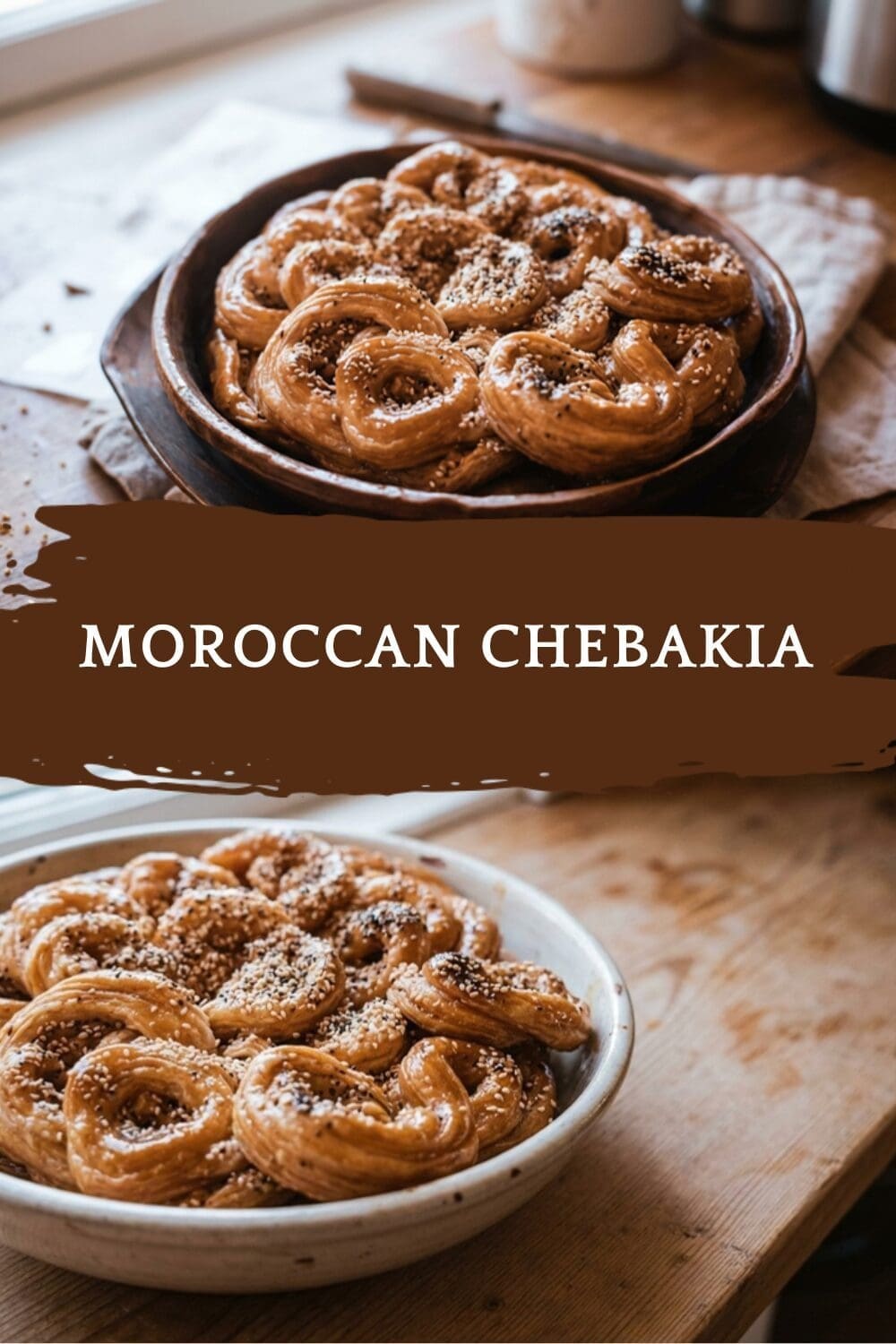
Moroccan chebakia, also known as mkharka, is a traditional flower-shaped cookie fried in oil, soaked in honey, and topped with sesame seeds. It’s a Ramadan favorite in Morocco, enjoyed for its crispy texture, sweet honey glaze, and nutty sesame flavor. Made from a dough flavored with anise, fennel, cinnamon, and orange flower water, chebakia pairs perfectly with mint tea or harira soup during iftar. Each piece takes time to shape but rewards with rich taste. This treat symbolizes celebration and is often prepared in large batches for family and friends. Store extras in an airtight container for up to a week. (78 words)
How much chebakia does one recipe make?
A standard chebakia recipe yields about 2 kg (over 4 pounds) of finished cookies, enough for 100-150 pieces depending on size. This large batch suits Ramadan gatherings or gifting. Factors like dough thickness and shaping affect the final count—thinner strips yield more cookies. Scale down by halving ingredients for smaller yields, around 1 kg or 50-75 pieces. Prep time is 2-3 hours plus resting, frying takes 1-2 hours in batches. Freeze uncooked dough shapes for up to a month to bake fresh later. Perfect for sharing during holidays. (92 words)
How do you shape chebakia dough?
Start with rested chebakia dough rolled 1/8-inch thick. Cut into 3×4-inch rectangles. Make four slits lengthwise, leaving ends intact, creating five strips. Fold one end over your index and middle fingers, thread the strips through like weaving a flower, then pinch corners to secure. It forms an elongated blossom shape. Practice on a few pieces first—shapes don’t need to be perfect for great taste. Vary sizes or simplify to loops if preferred; flavor stays the same. Dust with flour to prevent sticking. Yields crispy results when fried right. (96 words)
How do you fry and soak chebakia?
Heat vegetable oil to 350°F (medium heat) in a deep pot. Fry chebakia in single layers for 8-10 minutes per side until medium golden brown and crispy inside—avoid high heat to prevent burning. Drain on paper towels. Prepare hot honey syrup (2:1 honey-water, boiled with orange flower water). Soak fried chebakia 5-7 minutes; shorter for crispier, less sweet cookies, longer for glossier, softer ones. Toss in toasted sesame seeds while warm. Cool fully before storing. This method ensures even cooking and shine. (94 words)
How do you prepare sesame seeds for chebakia and how long does it last?
Pick through raw sesame seeds to remove debris. Spread on a baking sheet and toast at 400°F for 10-15 minutes, stirring halfway, until golden and nutty. Cool completely before sprinkling on honey-soaked chebakia. For storage, keep cooled cookies in an airtight container at room temperature for 5-7 days; they soften slightly over time. Refrigerate up to 2 weeks or freeze for 1 month—re-crisp in a 300°F oven for 5 minutes. Avoid plastic bags to maintain crunch. Ideal for Ramadan prep ahead. (92 words)

Moroccan Chebakia
🍯 Indulge in Chebakia for its sesame-packed healthy fats and antioxidants, plus natural sweetness from honey that supports energy during Ramadan fasting breaks.
🌙 This traditional Moroccan treat brings cultural richness to Iftar gatherings, with its crispy-honeyed bliss easy to share and customize for festive, memorable moments.
- Total Time: 1 hour 45 minutes
- Yield: About 40 cookies (8-10 servings)
Ingredients
– 1/2 kilogram (about 4 cups) flour, plus extra if needed
– 1 soup bowl full (approximately 200 grams or 7 ounces) of golden unhulled sesame seeds, toasted
– 1 teaspoon ground anise
– 1 teaspoon ground cinnamon
– 1/2 teaspoon salt
– 1/2 teaspoon crumbled saffron threads
– 1/4 teaspoon Moroccan yellow colorant
– Pinch of Gum Arabic grains mixed with 1/4 teaspoon sugar and crushed into powder
– 1 extra-large egg
– 1/4 cup melted butter
– 1/4 cup olive oil
– 1/4 cup vinegar
– 1/4 cup orange flower water
– 2 teaspoons yeast dissolved in 1/4 cup warm water
– 1.5 kilograms (about 3 pounds) honey
– 2 tablespoons orange flower water (for the honey)
– 1.5 liters vegetable oil for frying
– 1/2 cup toasted golden unhulled sesame seeds for decoration
Instructions
1-First Step: Gather and measure all ingredients, including 1/2 kilogram of flour, toasted sesame seeds, and spices, to ensure everything is ready for smooth preparation of Moroccan Chebakia.
2-Second Step: Toast the sesame seeds by spreading them on a baking sheet and baking at 400°F for 10-15 minutes until they turn golden and develop a nutty flavor; let them cool completely before proceeding.
3-Third Step: Grind one bowlful of the toasted sesame seeds in a food processor until it forms a moist powder, which will be mixed into the dough for added texture and taste in your Moroccan Chebakia.
4-Fourth Step: In a large bowl, combine the ground sesame powder with the flour, ground anise, cinnamon, salt, saffron, yellow colorant, and the Gum Arabic mixture to create the dry base for your dough.
5-Fifth Step: Add the wet ingredients egg, melted butter, olive oil, vinegar, orange flower water, and the yeast dissolved in warm water mixing by hand until it forms a stiff yet pliable dough; knead for 7-8 minutes by hand or 4-5 minutes with a mixer, adding more flour if the dough feels too sticky.
6-Sixth Step: Divide the dough into four portions, shape each into a mound, and let them rest in plastic bags for 10-15 minutes to make rolling easier and ensure the Moroccan Chebakia shapes hold well.
7-Seventh Step: Roll out each portion to the thickness of thin cardboard, cut into palm-sized rectangles, and make four lengthwise cuts without going through the edges to form five attached strips for shaping.
8-Eighth Step: Weave the strips by threading alternating ones to create an elongated flower shape, pinching the ends to secure, then place them on baking sheets for frying preparation.
9-Ninth Step: Heat 1 inch of vegetable oil in a pot to medium heat and fry the shaped Chebakia in batches for about 10 minutes until they turn medium brown, adjusting the heat to avoid burning or undercooking; this step yields the crispy texture.
10-Tenth Step: While frying, heat the honey with 2 tablespoons of orange flower water until it’s frothy but not boiling, then drain the fried cookies briefly before soaking them in the hot honey for 5-7 minutes, adjusting time for desired sweetness.
11-Eleventh Step: Remove the soaked cookies from the honey, arrange them on trays, and sprinkle the centers with the remaining toasted sesame seeds for decoration; repeat with the rest of the dough batches.
12-Final Step: Allow the Moroccan Chebakia to cool fully before serving, pairing them with mint tea or as part of Iftar, and note that this recipe makes about 2 kilograms, perfect for sharing or storing for later enjoyment.
Last Step:
Please leave a rating and comment letting us know how you liked this recipe! This helps our business to thrive and continue providing free, high-quality recipes for you.Notes
🌱 Toast sesame seeds until deeply golden for maximum nutty flavor, but watch closely to avoid burning and maintain their beneficial oils.
🍯 Adjust honey soak time based on preference—shorter for crispier cookies, longer for softer, sweeter ones that absorb more syrup.
👥 Make dough and shape in a group for efficiency, as this traditional recipe yields a large batch perfect for sharing during Ramadan.
- Prep Time: 45 minutes
- Resting Time: 15 minutes
- Cook Time: 45 minutes
- Category: Dessert
- Method: Frying
- Cuisine: Moroccan
- Diet: Vegetarian
Nutrition
- Serving Size: 4 cookies
- Calories: 200 kcal per cookie
- Sugar: 15g
- Sodium: 50mg
- Fat: 10g
- Saturated Fat: 2g
- Unsaturated Fat: 8g
- Trans Fat: 0g
- Carbohydrates: 25g
- Fiber: 2g
- Protein: 3g
- Cholesterol: 5mg


