

Why You’ll Love This Broiled Salmon
Broiled salmon is a go-to choice for anyone looking for a meal that’s both simple and satisfying, especially on busy days when you want something nutritious without much effort. This recipe comes together in minutes, making it perfect for home cooks and busy parents who need a quick dinner fix. Plus, it’s packed with health perks that make it a smart pick for your table.
One of the best things about this broiled salmon is how easy it is to prepare. You can have it ready in just about 12 minutes total, which is ideal for students or working professionals juggling tight schedules. The process uses the broiler to crisp up the outside while keeping the inside tender, so you get a flavorful dish that feels special without any fuss.
From a health angle, this broiled salmon delivers plenty of omega-3 fatty acids, protein, and vitamins that support heart health and energy levels. It’s naturally gluten-free and can fit into diets like keto or low-calorie plans with a few tweaks. Whether you’re a food enthusiast exploring new tastes or a senior seeking light meals, this recipe adapts beautifully to what you need.
Beyond that, the broiled salmon’s versatility shines through in how it pairs with various sides, from fresh veggies to pasta. This makes it great for family dinners or meal prepping for the week ahead. If you’re into quick cooking methods that save time and keep your kitchen cool, this recipe fits right into your routine, just like the no-heat ideas on this blog.
Benefits in Detail
Let’s break down why this dish stands out. First, it’s loaded with nutrients: each serving has about 303 calories, 34 grams of protein, and essential fats that boost brain function. These elements make it a favorite for diet-conscious folks aiming to eat well without overcomplicating things. You might even use leftovers in a salad or pasta for an easy next-day lunch.
Another plus is the distinctive flavor from broiling, which gives a nice crisp to the fish while locking in moisture. That’s especially helpful if you’re dealing with hot weather and want to avoid turning on the stove. Imagine serving this with a side of greens for a balanced meal that feels light yet filling.
For travelers or newlyweds setting up a simple kitchen, this recipe requires minimal tools and ingredients. It’s also fun to customize, so you can experiment with seasonings to match your mood. Overall, broiled salmon is that reliable dish you turn to again and again for its ease and taste.
Jump to:
- Why You’ll Love This Broiled Salmon
- Benefits in Detail
- Essential Ingredients for Broiled Salmon
- Special Dietary Options
- How to Prepare the Perfect Broiled Salmon: Step-by-Step Guide
- Cooking and Finishing Steps
- Dietary Substitutions to Customize Your Broiled Salmon
- Mastering Broiled Salmon: Advanced Tips and Variations
- Flavor Ideas and Storage Hacks
- How to Store Broiled Salmon: Best Practices
- FAQs: Frequently Asked Questions About Broiled Salmon
- Do I need to flip the salmon when broiling it?
- What kind of pans should I use for broiling salmon?
- Can I broil salmon straight from the freezer?
- What side dishes can I broil alongside salmon?
- How long does it take to broil salmon properly?
- Broiled Salmon
- Ingredients
- Instructions
- Last Step:
- Notes
- Nutrition
- Did you make this recipe?
Essential Ingredients for Broiled Salmon
Gathering the right ingredients is key to making broiled salmon turn out just right. This section lays out everything you need in a clear list, pulling from the details provided. We’ll focus on precise measurements to help you get it perfect every time.
- 4 salmon fillets, each 6 ounces (approximately 170 grams each)
- 2 tablespoons oil
- Seasoning blend of choice, or a specific seasoning mix including smoked paprika, garlic powder, kosher salt, brown sugar, mustard, and additional ingredients (use as needed to evenly sprinkle)
- Optional: Chopped fresh herbs such as parsley, dill, or chives for serving
These ingredients keep things straightforward, focusing on quality to bring out the fish’s natural flavor. For instance, the oil helps create that crisp top, while the seasoning adds a tasty kick without overwhelming the salmon. If you’re watching calories, stick to just the basics here.
Special Dietary Options
Main ingredients like the salmon fillets provide rich omega-3 oils and protein, but you can swap things for different diets. For a vegan twist, try marinated tofu or tempeh in place of salmon. This ensures everyone at the table can enjoy a similar broiled dish that’s still quick and nutritious.
Remember, the listed items are naturally gluten-free, so double-check for cross-contamination if that’s a concern. You could reduce the oil to 1 tablespoon for a lower-calorie version, keeping the meal light and healthy. These adjustments make broiled salmon flexible for all kinds of eaters, from college students to baking enthusiasts looking for protein-packed options.
How to Prepare the Perfect Broiled Salmon: Step-by-Step Guide
Getting broiled salmon right is all about following simple steps that lead to a delicious result. Start by setting up your oven for success, and you’ll have a flavorful dinner ready in no time. This method uses the broiler to cook the fish quickly while keeping it moist and tasty.
First, position the oven rack about 6 inches from the top broiling element, in the upper third of the oven. This setup ensures even heat for that perfect crisp. Next, line a baking dish large enough to hold the salmon fillets in a single layer with aluminum foil or broiler-safe parchment for easy cleanup.
Arrange the salmon fillets skin-side down, making sure they don’t touch each other. This helps the fish cook evenly and keeps the skin from sticking. Then, brush the fillets with the 2 tablespoons of oil and evenly sprinkle with your seasoning mix.
Cooking and Finishing Steps
Broil the salmon for 7 to 9 minutes, checking at 6 minutes to see how it’s doing. Cook until the salmon flakes easily with a fork, looks medium rare in the center, and hits an internal temperature of 135 degrees Fahrenheit. For well-done salmon, go up to 140 degrees Fahrenheit, but don’t overdo it to avoid drying out the fish.
If the top starts to brown too fast, loosely cover it with foil. Once it’s done, let the salmon rest for 5 minutes before serving to let the flavors settle. For more meal ideas, check out this easy chicken spaghetti recipe on our site, which pairs well for a balanced plate.
Throughout this process, use an instant-read thermometer to check doneness accurately, as it can go from perfect to overcooked quickly. This step-by-step approach works great for busy parents or working professionals who need reliable results.

Dietary Substitutions to Customize Your Broiled Salmon
Making broiled salmon your own is simple with a few smart swaps, especially if you have dietary needs. This lets you adapt the recipe without losing that quick and tasty appeal. Whether you’re vegan or just mixing things up, these changes keep the dish versatile.
For the main protein, swap salmon with marinated tofu, tempeh, or even thick portobello mushroom caps if you’re vegetarian. Pescatarians might try trout or arctic char for a similar broiled effect. These options maintain the omega-3 benefits or provide plant-based nutrients.
- Swap lemon for orange or lime juice to add a fresh twist.
- Use fresh herbs like dill, parsley, or cilantro for extra flavor.
- Opt for gluten-free alternatives like tamari if you’re adding sauces.
- Pair with seasonal veggies, such as grilled asparagus in summer or roasted roots in cooler months.
These substitutions make broiled salmon adaptable for everyone, from diet-conscious individuals to food enthusiasts. Remember, keeping portions balanced helps with low-calorie goals, so adjust oil or herbs as needed. This way, you can enjoy a customized meal that’s still effortless to prepare.
Mastering Broiled Salmon: Advanced Tips and Variations
Once you’re comfortable with the basics, take your broiled salmon to the next level with some pro tips. These ideas add fun and flavor while keeping things simple for everyday cooking. It’s all about building on what works to make your meals even better.
For extra taste, marinate the salmon in citrus and herbs for about 30 minutes before broiling. This step infuses the fish with more depth without much extra time. You can also finish it with a quick sear in a hot pan for that crispy skin everyone loves.
Flavor Ideas and Storage Hacks
Experiment with different spice blends, like Cajun for a kick or Mediterranean for a herbal note. Another option is Asian-inspired mixes with ginger and sesame oil to change things up. For presentation, serve on a bed of greens with lemon wedges and a light drizzle of oil to make it look as good as it tastes.
Make-ahead tricks include seasoning the fillets ahead and storing them covered in the fridge for up to 24 hours. This is perfect for weeknight ease, especially for apartment dwellers or seniors who appreciate less daily prep. Plus, leftovers can go into salads or pasta, tying into recipes like our turkey carcass soup for creative meals.
High broiler heat, around 550 degrees Fahrenheit if possible, cooks salmon fast and crisps the top beautifully. Always monitor closely to avoid overcooking, and use skin-on fillets to keep them moist. These tips help you master the dish while fitting into a no-heat lifestyle when paired with fresh sides.
How to Store Broiled Salmon: Best Practices
Proper storage keeps your broiled salmon fresh and ready for later, which is handy for meal prep. Follow these steps to enjoy leftovers without losing quality. It’s all about simple habits that make your cooking go further.
Store cooked broiled salmon in an airtight container in the refrigerator for up to 3 days, as this helps maintain its texture and flavor. For freezing, wrap it tightly in foil or plastic wrap and place it in a freezer-safe bag to keep for up to 2 months. When reheating, warm it gently in a low-temperature oven around 275 degrees Fahrenheit or use short bursts in the microwave to prevent drying.
- Portion into single servings before storing for quick access during the week.
- Thaw frozen salmon overnight in the fridge before reheating for the best results.
- Use airtight containers for any prepared seasoning to last at room temperature.
This approach works well for busy lifestyles, letting you repurpose salmon in dishes like flaked additions to salads. Suggested sides, such as veggies or grains, can also be stored alongside for complete meals. With these practices, you minimize waste and maximize convenience.
FAQs: Frequently Asked Questions About Broiled Salmon
Do I need to flip the salmon when broiling it?
No, flipping the salmon is not necessary when broiling. Keep the salmon skin-side down to allow the flesh to caramelize and develop a crispy texture under the broiler’s heat. This method helps achieve even cooking and protects the delicate flesh from drying out.
What kind of pans should I use for broiling salmon?
Use broiler-safe metal pans or baking sheets for broiling salmon. Avoid non-stick pans unless they are specifically labeled as broiler-safe, as high heat can damage the coating. Also, do not use glass or regular ceramic dishes because they may crack under intense heat. A sturdy stainless steel or cast iron pan works best.
Can I broil salmon straight from the freezer?
It’s best to thaw salmon completely before broiling. Thawing ensures the salmon cooks evenly and helps the seasonings stick better. Broiling frozen salmon risks uneven cooking and a less tender texture. If you need to cook salmon from frozen, other methods like baking or pan-searing are more suitable.
What side dishes can I broil alongside salmon?
You can broil quick-cooking vegetables such as asparagus, cherry tomatoes, or thinly sliced potatoes alongside or just after the salmon cooks. For thicker vegetables or potatoes, bake or roast them first, then place them under the broiler for a few minutes to add crispness without overcooking the salmon.
How long does it take to broil salmon properly?
Broiling salmon typically takes 6-10 minutes depending on the thickness of the fillet and the distance from the broiler. A general rule is about 5-6 minutes per half-inch of thickness. The salmon is done when the flesh flakes easily with a fork and reaches an internal temperature of 145°F (63°C).

Broiled Salmon
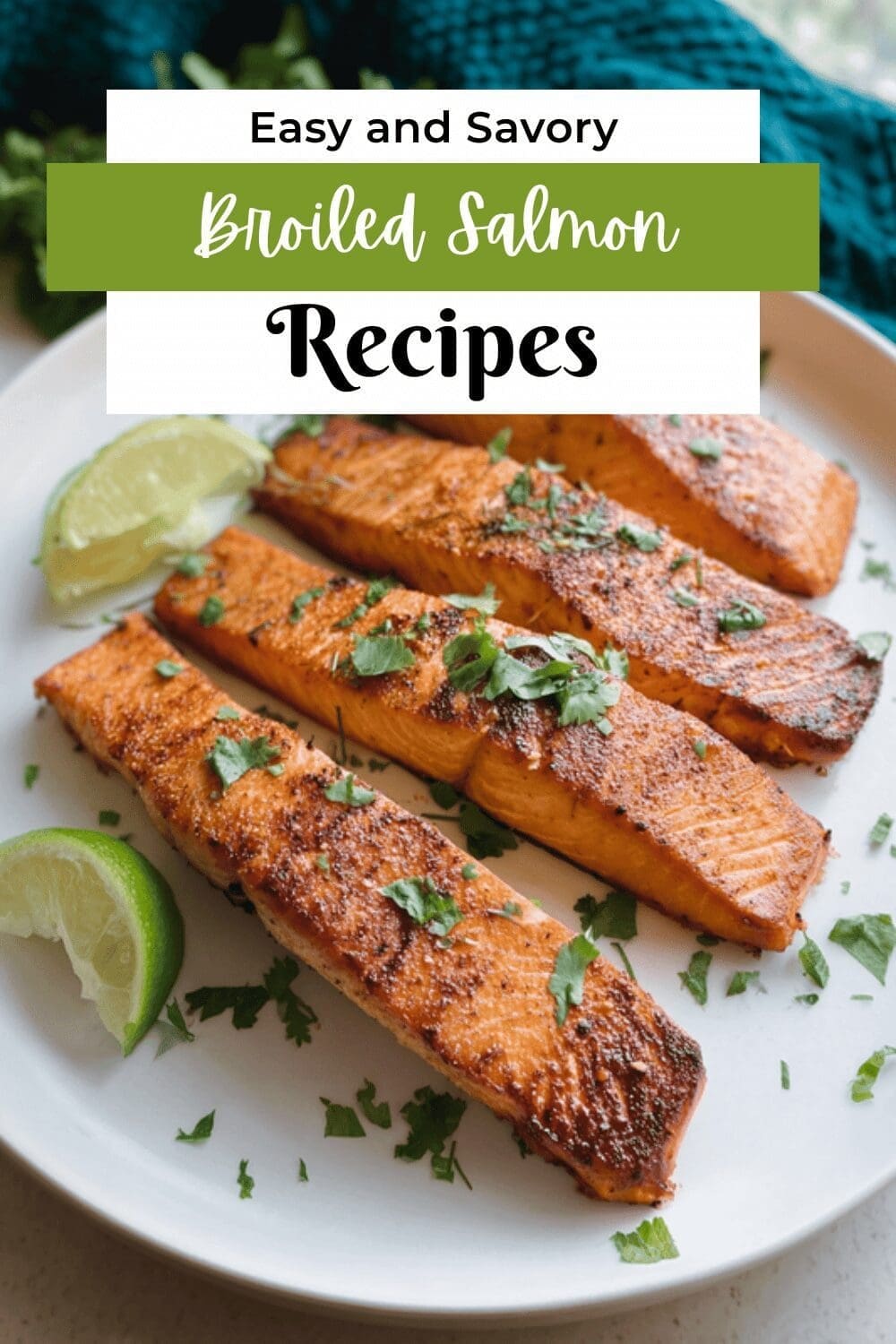
🐟 This Broiled Salmon recipe provides a quick, healthy, and delicious dinner option that’s packed with protein and omega-3s.
🔥 Perfect for busy weeknights, it delivers tender, flavorful salmon with a beautifully crisped top in under 15 minutes.
- Total Time: 12 minutes
- Yield: 4 servings
Ingredients
– 4 salmon fillets, each 6 ounces (approximately 170 grams each)
– 2 tablespoons oil
– Seasoning blend of choice, or a specific seasoning mix including smoked paprika, garlic powder, kosher salt, brown sugar, mustard, and additional ingredients (use as needed to evenly sprinkle)
– Optional: Chopped fresh herbs such as parsley, dill, or chives for serving
Instructions
1-First, position the oven rack about 6 inches from the top broiling element, in the upper third of the oven. This setup ensures even heat for that perfect crisp.
2-Next, line a baking dish large enough to hold the salmon fillets in a single layer with aluminum foil or broiler-safe parchment for easy cleanup.
3-Arrange the salmon fillets skin-side down, making sure they don’t touch each other. This helps the fish cook evenly and keeps the skin from sticking.
4-Then, brush the fillets with the 2 tablespoons of oil and evenly sprinkle with your seasoning mix.
5-Broil the salmon for 7 to 9 minutes, checking at 6 minutes to see how it’s doing. Cook until the salmon flakes easily with a fork, looks medium rare in the center, and hits an internal temperature of 135 degrees Fahrenheit. For well-done salmon, go up to 140 degrees Fahrenheit, but don’t overdo it to avoid drying out the fish.
6-If the top starts to brown too fast, loosely cover it with foil. Once it’s done, let the salmon rest for 5 minutes before serving to let the flavors settle.
7-Throughout this process, use an instant-read thermometer to check doneness accurately, as it can go from perfect to overcooked quickly. This step-by-step approach works great for busy parents or working professionals who need reliable results.
Last Step:
Please leave a rating and comment letting us know how you liked this recipe! This helps our business to thrive and continue providing free, high-quality recipes for you.Notes
🐟 It is best to use skin-on salmon to keep the fillet moist and intact.
🍽️ Use broiler-safe metal or ceramic pans; avoid non-stick or glass not rated for broiling.
⏱️ Monitor closely to avoid overcooking; salmon cooks quickly under the broiler.
- Prep Time: 5 minutes
- Cook Time: 7 to 9 minutes
- Category: Main Dish
- Method: Broiling
- Cuisine: American
- Diet: Pescatarian, Gluten-Free
Nutrition
- Serving Size: 1 fillet
- Calories: 303 kcal
- Fat: 18 g
- Saturated Fat: 3 g
- Protein: 34 g
- Cholesterol: 94 mg


