

Chinese Coconut Pudding
I built this Chinese Coconut Pudding after spending a few weekends working on a mango pudding my family could not stop eating. I expected the coconut version to be the lesser sibling. I was wrong. It is every bit as good, and honestly a little better on a hot afternoon when you want something cold and silky instead of heavy.
The whole thing comes together with five ingredients. No oven, no custard, no tempering eggs, no long list of specialty items to hunt down. If you can boil water and whisk, you can make this.

I have to say, this dessert carries a lot of memory for me. Growing up, weekend dim sum was a family ritual, and coconut pudding was the thing I waited for.
My grandmother would slide the little dish toward me before the carts came around again. Some restaurants take their pudding game seriously and turn it out as a bunny with black sesame seeds for eyes, which always felt a little cruel to eat.
Others serve it right inside an actual coconut, which is a beautiful presentation and a lot of work for a home kitchen.
What I love most is how little effort it asks for. You stir, you pour, you chill, and the refrigerator does the rest. Five ingredients and one bowl, and you end up with something that looks like it came off a dim sum cart.
Jump to:
- Chinese Coconut Pudding
- Key Ingredients
- Coconut Milk
- Gelatin
- How to prevent separate layers from forming
- More Desserts
- Ingredients
- Instructions
- Recipe details
- FAQs
- What is Chinese coconut pudding?
- How do you make Chinese coconut pudding?
- Why does my coconut pudding separate into layers?
- Can you use agar agar instead of gelatin for coconut pudding?
- Chinese Coconut Pudding
- Ingredients
- Instructions
- Last Step:
- Did you make this recipe?
Key Ingredients
You only need five main ingredients, and two of them decide whether the pudding turns out silky or split. Everything else is pantry level. Here is what matters most, and why the order you add things matters just as much as the list itself.
Two of these ingredients get their own section below, because they are the ones that cause the most questions. The rest are simple.
Coconut Milk
Coconut milk does the heavy lifting here, and the fat level is really a matter of personal taste. I use regular full fat coconut milk because I want that creamy, almost custard like texture. The label on my can lists about 15 grams of fat per 1/3 cup, and that fat is exactly what gives the pudding its body.
If you reach for a lighter version, the pudding will still set, but the texture leans thinner and more jelly like. That is not a disaster, just a different dessert.
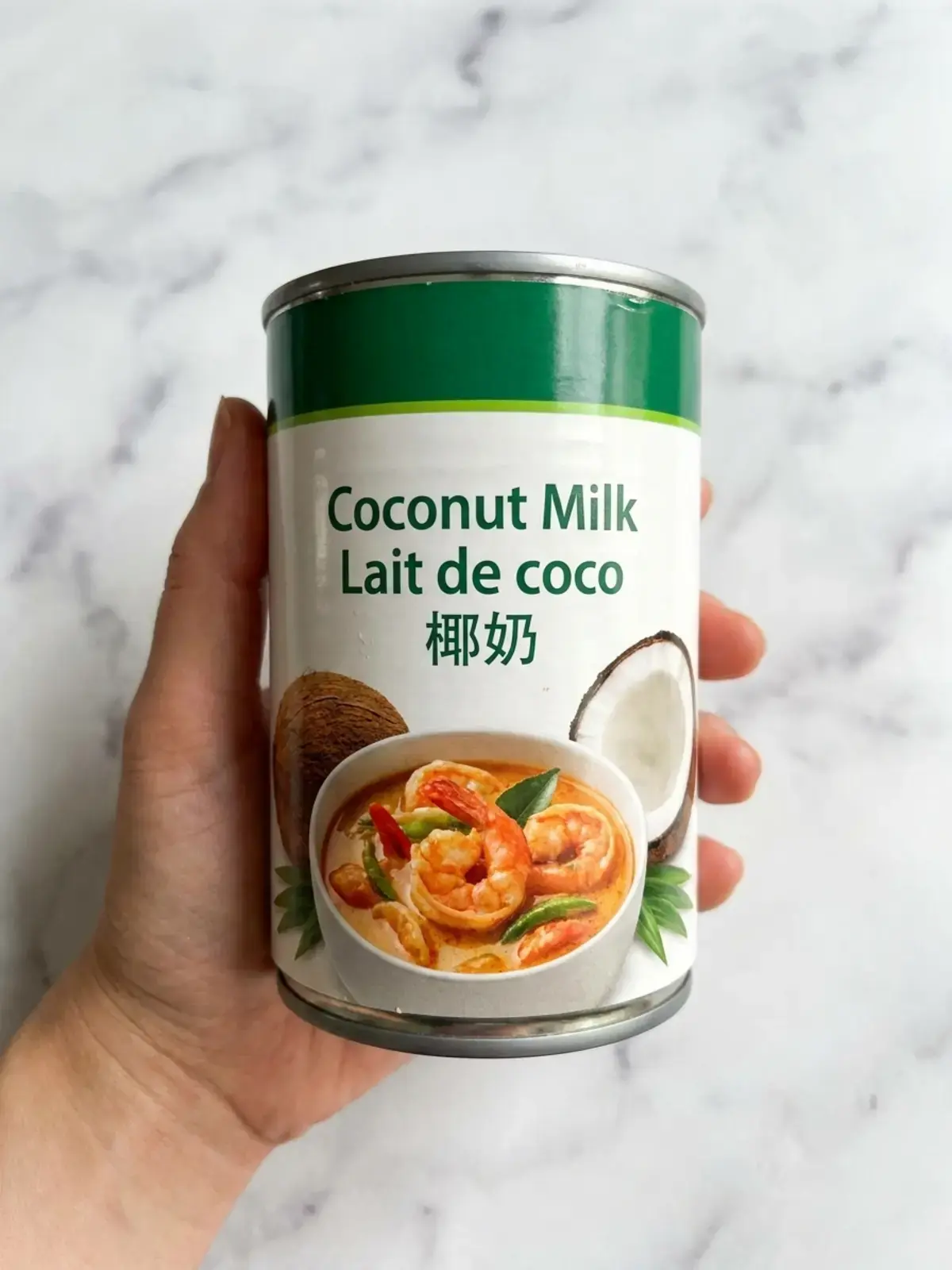
The important thing is to shake the can well before you open it, because the fat and the water separate inside the can and you want them back together in the bowl.
Gelatin
Gelatin is what turns the liquid into pudding once it chills. It is sold in most Western grocery stores, usually near the baking supplies or the boxed dessert mixes, so you do not need a specialty shop.
I use three tablespoons for a firm pudding that holds a clean shape when it is unmolded. If you prefer something softer and more spoonable, two tablespoons will do the job.
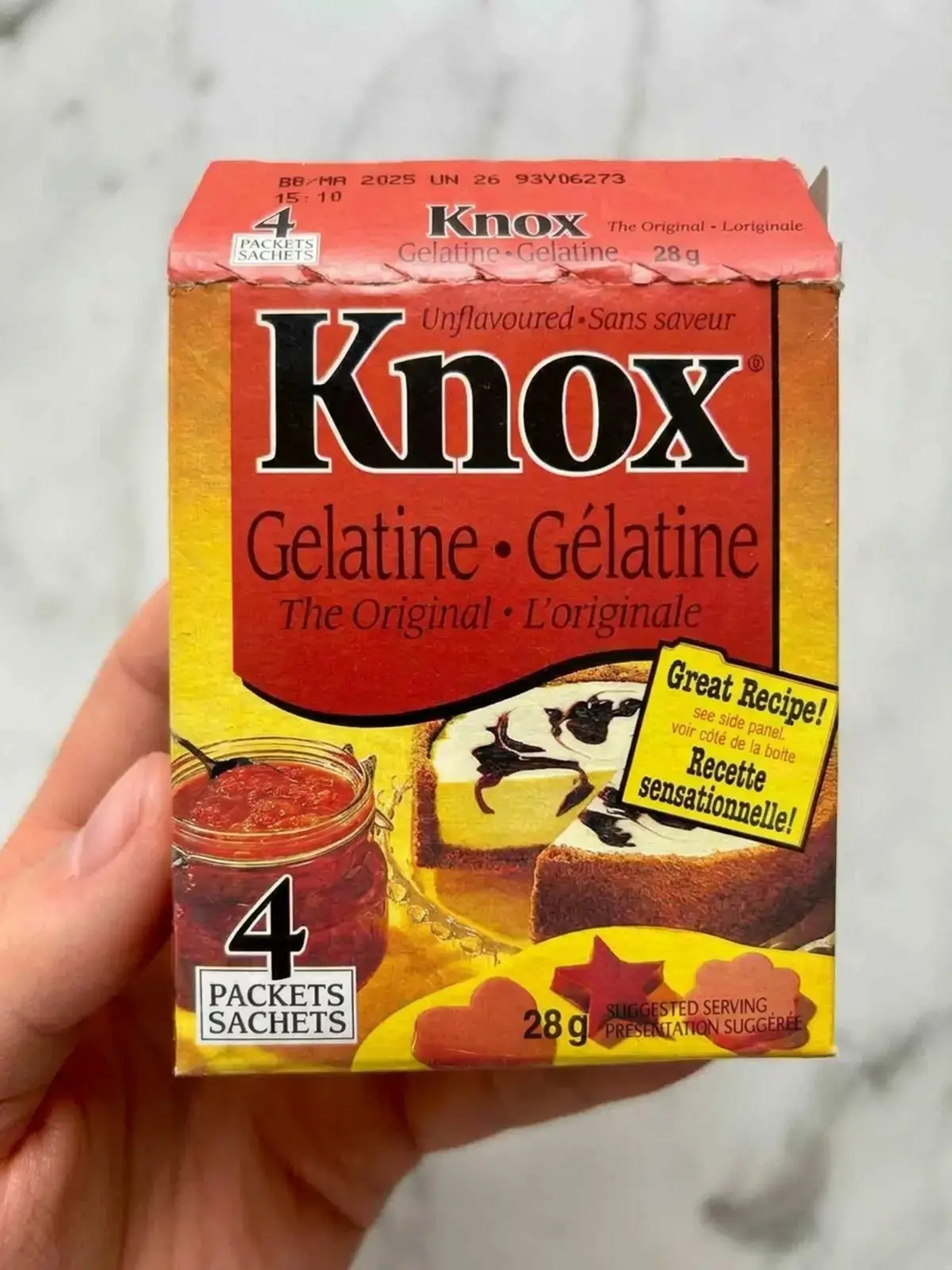
One rule I follow every single time: dissolve the gelatin in boiling water first. Cold liquid will not do it. You will end up with gritty specks that never quite disappear, and no amount of whisking later will fix them.
Let the mixture sit for a couple of minutes after stirring so every grain has fully dissolved before anything else goes into the bowl.
How to prevent separate layers from forming
My first attempt was a mess. I heated everything on the stove until it was hot, poured it into a container, and waited. When I checked a few hours later, the pudding had split into two distinct layers: a creamy white layer on top and a translucent jelly layer underneath. It tasted fine. It looked like a science experiment.
I did some reading and found the cause. The fat in coconut milk melts when it gets hot, and once that fat separates, it does not want to go back. Chilling the mixture only locks the split in place. So the fix was not more whisking or a different brand of coconut milk. The fix was temperature control.
Here is the method that finally worked. Dissolve the gelatin in the boiling water as usual. Then stir in the cold milk while the mixture is still warm.
That single step drops the temperature enough that the coconut milk never gets hot enough to break. Only after the milk is fully stirred in do you add the coconut milk, and then you give it a good whisk so the coconut fat is spread evenly through the liquid.
After chilling, the result was one smooth, uniform block of pudding with no layers at all. I have used that order ever since, and I have not had a split since.
The texture is the whole point of getting this right. A properly emulsified pudding is firm enough to hold a shape and soft enough to melt on your tongue, with a clean coconut flavor that is not overly sweet.
Temperature, not technique, decides whether your coconut pudding stays smooth.
More Desserts
If you like this one, the same cold set idea opens up a whole shelf of easy desserts. Mango pudding is the closest cousin, and it is where I started. The technique is nearly the same, with fruit doing the flavor work.
Overnight oats, chia puddings, and no bake cheesecake fillings all live in the same neighborhood. They are the kind of desserts that keep your kitchen cool and your hands mostly idle, which is exactly what I want in the middle of a hot week.
Cold set desserts also travel well. I usually bring this coconut pudding to a cookout in a rectangular container and cut it into squares at the table. It holds its shape in a cooler and it never needs to be reheated.
The pattern to remember is simple: dissolve, cool, set, chill. Once you have that rhythm, you can swap in different flavors without changing anything else.
Ingredients
This makes six servings, and the list is short. That is part of the charm.
| Ingredient | Amount | Notes |
|---|---|---|
| Sugar | 1/2 cup | Whisked into the boiling water |
| Gelatin | 3 tablespoons | Use 2 tablespoons for a softer set |
| Boiling water | 1 cup | Needed to dissolve the gelatin |
| Milk | 1 cup | Stirred in before the coconut milk |
| Coconut milk | 1 can, 14oz/400mL | Full fat, about 15g of fat per 1/3 cup |
| Almond extract | 1/2 teaspoon | Optional |
A few notes before you start. The gelatin amount is a choice, not a mistake: three tablespoons gives you a firm pudding, two tablespoons gives you a softer one. Pick one and stick with it, because changing the amount partway through will change how the pudding sets.
The almond extract is optional. Half a teaspoon is enough to add a soft almond note that plays nicely with coconut, and you will not taste it as a separate flavor. If you skip it, the pudding still tastes complete.
You will also notice that the milk goes in before the coconut milk. That order is deliberate, and the next section explains why.
Instructions
The method is short. The order matters more than the speed.
- In a large bowl, whisk the sugar into 1 cup of boiling water until it dissolves completely.
- Stir in the gelatin and mix well. Let the mixture sit for another two minutes so everything dissolves properly.
- Stir in the milk first, then stir in the coconut milk. Give it a good whisk to make sure the coconut fat is evenly distributed. If you wish, add 1/2 teaspoon of almond extract.
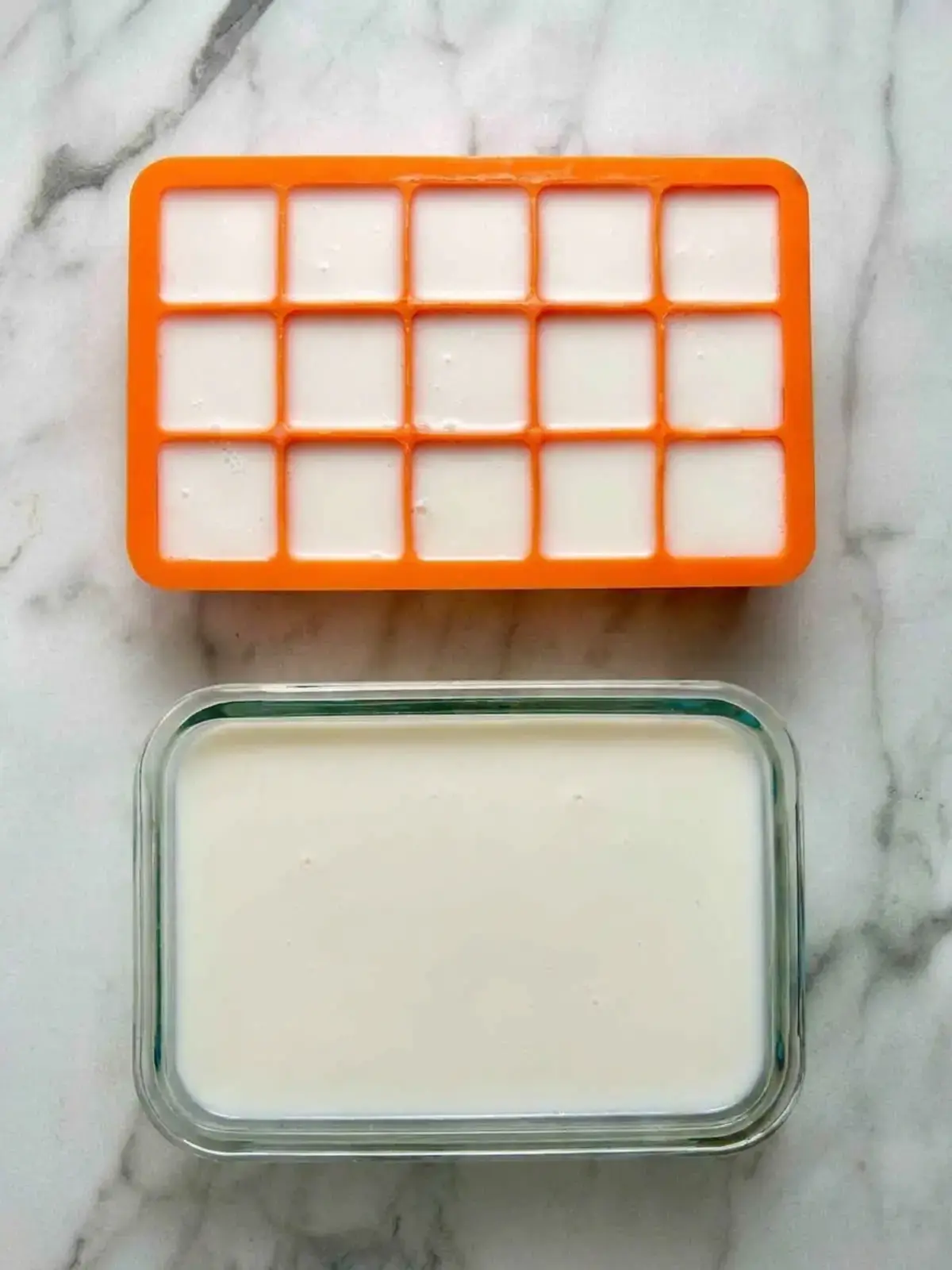
- Pour the mixture into a rectangular container, silicone molds, or ramekins.
- Chill until set. Plan on about 4 hours 10 minutes from start to finish.
- To release the pudding from a silicone mold, submerge the mold in hot water for about 30 seconds.
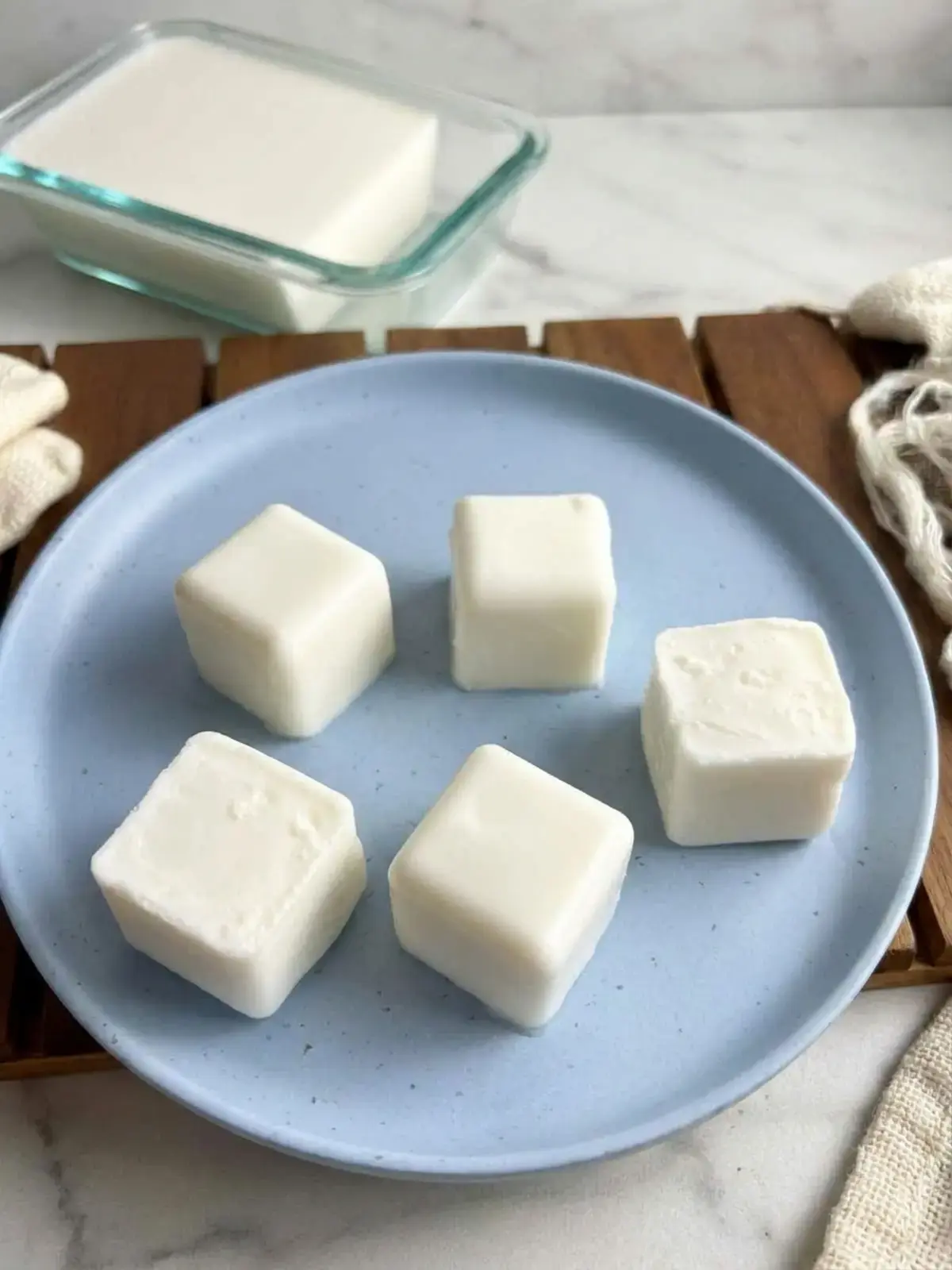
A silicone mold gives you the cleanest shape, and the pudding comes out with no marks at all. If you pour into a rectangular container or ramekins instead, you will need to cut the pudding with a knife, which leaves cut marks on the surface. It still tastes the same, it just looks a little less tidy.
Pour slowly so the surface settles level, and if any large bubbles rise, tap the container gently on the counter before it goes into the refrigerator.
To unmold, submerge the silicone mold in hot water for about 30 seconds, then invert it onto a plate. Do not rush this step. A short dip loosens the edges so the pudding slides out in one piece.
Whisk the coconut milk in well. Even fat distribution is what keeps the texture consistent from the first spoon to the last.
Recipe details
| Detail | Value |
|---|---|
| Prep time | 4 hours 10 minutes |
| Total time | 4 hours 10 minutes |
| Servings | 6 |
| Method | Cold set with gelatin |
The clock here is mostly waiting. Prep time and total time both come to 4 hours 10 minutes, and the great majority of that is chilling in the refrigerator. The active work is quick.
Equipment is minimal: one large bowl, a whisk, and something to pour into. A silicone mold is my first choice, followed by a rectangular container when I want neat squares.
Serve it cold, straight from the refrigerator. Because it is set with gelatin, it portions neatly and holds a clean edge, which makes it easy to plate ahead of time when you have guests coming.
If you want the firmest, cleanest slices, use the full three tablespoons of gelatin and give it the full chilling time.
FAQs
What is Chinese coconut pudding?
Chinese coconut pudding, also known as coconut jelly, is a classic dim sum dessert made with coconut milk, milk, sugar, and gelatin. It sets into a firm, bouncy, sliceable texture rather than a soft creamy custard. This dessert is naturally gluten-free and often served in fun shapes like bunnies or fish at dim sum restaurants.
How do you make Chinese coconut pudding?
To make Chinese coconut pudding, whisk ½ cup sugar into 1 cup boiling water until dissolved. Stir in 3 tablespoons gelatin and let sit 2 minutes. Stir in 1 cup milk, then 1 can of full-fat coconut milk, whisking well. Pour into silicone molds or a container and refrigerate for about 4 hours until set. This recipe yields 6 servings.
Why does my coconut pudding separate into layers?
Your coconut pudding separates because the fat in the coconut milk melts and rises to the top, creating a creamy layer above a translucent jelly layer. To prevent this, dissolve the gelatin in boiling water first, then stir in cold milk before adding the coconut milk. This gradual temperature adjustment keeps the coconut fat emulsified throughout the mixture.
Can you use agar agar instead of gelatin for coconut pudding?
Yes, you can substitute agar agar for gelatin to make a vegetarian version of Chinese coconut pudding. Use about 1 tablespoon of agar agar powder for every 3 tablespoons of gelatin, but check your brand's instructions as ratios can vary. Unlike gelatin, agar agar must be boiled for 1 to 2 minutes to fully activate and will set at room temperature.

Chinese Coconut Pudding
Chinese Coconut Pudding I built this Chinese Coconut Pudding after spending a few weekends working on a mango pudding my family could not stop eating. I expected the coconut version to be the lesser sibling.
- Total Time: 250 min
- Yield: 6 1x
Ingredients
Ingredients
½ cup sugar
3 tablespoons gelatin
1 cup boiling water
1 cup milk
1 can coconut milk, 14oz/400mL can; full-fat
½ teaspoon almond extract
Instructions
Instructions
1-In a large bowl, whisk the sugar: In a large bowl, whisk the sugar in 1 cup of boiling water until dissolved. Stir in the gelatin and mix well. Allow the mixture to sit for 2 another two minutes to make sure everything is dissolved properly.
2-Stir in the milk first then stir: Stir in the milk first then stir in the coconut milk. Give it a good whisk to make sure the coconut’s fat is evenly distributed. If you wish, you can add ½ teaspoon of almond extract.
3-Finally, pour the mixture into a rectangular: Finally, pour the mixture into a rectangular container, silicone molds, or ramekins.
4-To release the pudding from a silicone: To release the pudding from a silicone mold, submerge the mold in hot water for about 30 seconds.
Last Step:
Please leave a rating and comment letting us know how you liked this recipe! This helps our business to thrive and continue providing free, high-quality recipes for you.- Prep Time: 0 min
- Cook Time: 0 min
- Method: mixed


