

Why You’ll Love This Sesame Noodles
If you’re searching for a tasty, no-fuss dish that fits right into a busy schedule, sesame noodles are a game-changer. This recipe stands out because it’s ready in just 15 minutes, making it ideal for anyone from busy parents to students juggling classes. Just imagine whipping up something delicious without much effort this is exactly why sesame noodles have become a favorite for quick meals.
Health-wise, sesame noodles pack in nutritious elements like sesame seeds, which provide healthy fats and a boost of energy. They’re loaded with fresh veggies you can add, offering fiber and vitamins that keep you feeling great all day. Plus, with options to make it vegan or gluten-free, it’s flexible for diets among food enthusiasts and health-conscious folks.
What really makes this dish shine is its versatility you can enjoy it as a simple side or turn it into a full meal with extras like carrots or chicken. The nutty flavor from sesame oil and seeds gives it that special touch, setting it apart from everyday noodles. Whether you’re a working pro or a senior looking for easy eats, this recipe is sure to become a go-to favorite.
Key Benefits at a Glance
- Super quick prep: Just 10 minutes of work and 5 minutes of cooking for total ease.
- Nutrient-rich: Features sesame seeds and veggies for protein, healthy fats, and fiber.
- Easy adaptations: Swap ingredients for vegan, gluten-free, or low-calorie versions.
- Flavor-packed: A perfect mix of nutty, savory, and tangy tastes in every bite.
Sesame noodles fit perfectly with the blog’s focus on no-heat meals, inspiring travelers and newlyweds to create satisfying dishes without fuss. For more ideas on simple noodle dishes, check out our easy chicken spaghetti recipe that’s just as straightforward and delicious.
Jump to:
- Why You’ll Love This Sesame Noodles
- Key Benefits at a Glance
- Essential Ingredients for Sesame Noodles
- Main Ingredients
- Sauce Ingredients
- How to Prepare the Perfect Sesame Noodles: Step-by-Step Guide
- Simple Steps for Success
- Dietary Substitutions to Customize Your Sesame Noodles
- Quick Adaptation Ideas
- Mastering Sesame Noodles: Advanced Tips and Variations
- Enhance Your Dish
- How to Store Sesame Noodles: Best Practices
- Storage Tips for Longevity
- FAQs: Frequently Asked Questions About Sesame Noodles
- What noodles are best to use for making sesame noodles?
- Can I make sesame noodles without adding nuts or nut butter?
- How long does homemade sesame noodle sauce keep in the refrigerator?
- Can I add vegetables or protein to make sesame noodles a full meal?
- Is it better to serve sesame noodles hot or cold?
- Sesame Noodles
- Ingredients
- Instructions
- Last Step:
- Notes
- Nutrition
- Did you make this recipe?
Essential Ingredients for Sesame Noodles
Gathering the right ingredients is the key to making sesame noodles that are full of flavor and simple to prepare. This section lists everything you need based on a reliable recipe that’s all about fresh, straightforward components. Let’s break it down into main ingredients and sauce specifics to keep things clear and organized.
For the best results, focus on fresh items that enhance the dish’s nutty taste and texture. Remember, this recipe aligns with our blog’s love for easy, no-cook or minimal-heat meals, perfect for home cooks and busy parents alike.
Main Ingredients
- 500 g / 1 lb fresh egg noodles (thin types such as hokkien noodles or other fresh egg noodles are recommended; dried noodles, rice noodles, or ramen can be used, but avoid very thin options like vermicelli or glass noodles)
- 3/4 cup green onions, finely sliced
- 1 tablespoon sesame seeds, plus extra for garnish
- 2 to 3 tablespoons crushed peanuts, optional, plus extra for garnish
Sauce Ingredients
- 1 ½ tablespoons dark soy sauce (can be substituted with all-purpose or light soy sauce, but avoid using only dark soy sauce to prevent overpowering the flavor)
- 1 tablespoon soy sauce
- 1 ½ tablespoons rice vinegar
- 2 tablespoons sesame oil
- 2 teaspoons fresh grated ginger
- 1 garlic clove, minced
- 2 teaspoons white sugar
- 2 tablespoons peanut butter
- 1 tablespoon sesame paste or an alternative like tahini (if unavailable, use additional peanut butter)
- 2 teaspoons garlic chili paste, adjusted to taste (optional, can be replaced with any chili sauce, pepper, or chili flakes)
This structured list ensures you have every item with exact quantities, making it simple for beginners like college students or apartment dwellers. Fresh noodles work best for that perfect coat of sauce, but feel free to adapt based on what you have on hand.
How to Prepare the Perfect Sesame Noodles: Step-by-Step Guide
Getting sesame noodles just right is all about following a few easy steps that anyone can handle, even if you’re new to the kitchen. Start by preparing your ingredients to keep things smooth and fun it’s a breeze for busy folks who want a quick win. Our blog loves recipes like this that skip heavy cooking, preserving nutrients and keeping your space cool.
First, cook the noodles according to package instructions, then drain and rinse briefly under cold water to prevent sticking. This step ensures they stay light and ready for the sauce. Next, in a bowl, mix all sauce ingredients until smooth; warm slightly if necessary to help combine, creating that rich, nutty blend.
Then, in a large bowl, combine the noodles with the sliced green onions, sauce, sesame seeds, and crushed peanuts if using. Toss everything well to coat each strand evenly. Finally, garnish with additional sesame seeds and serve warm or at room temperature for the best taste.
Simple Steps for Success
- Prepare and cook noodles as directed.
- Whisk the sauce ingredients together.
- Toss noodles with sauce and add-ins.
- Garnish and serve right away.
For a heartier meal, add shredded vegetables like carrots, cabbage, or bean sprouts as mentioned in our recipe tips. If you’re looking for more noodle inspiration, visit our turkey carcass soup page for another easy option that builds on basic ingredients.
This method takes only 15 minutes total, with 10 minutes prep and 5 minutes cooking, making it ideal for working professionals. The nutritional info shows about 178 calories per 89-gram serving, so it’s a light yet satisfying choice.

Dietary Substitutions to Customize Your Sesame Noodles
One of the best parts about sesame noodles is how easy it is to tweak them for different needs, whether you’re vegan, gluten-free, or watching calories. This flexibility makes the recipe a hit with our target audience, from diet-conscious individuals to families with varied tastes. Let’s explore some smart swaps to keep things delicious and inclusive.
For protein boosts, swap in tofu or tempeh instead of animal-based options like chicken or shrimp to make it vegan-friendly. If gluten is a concern, use rice noodles or gluten-free soy sauce to maintain that classic texture. Adding edamame or chickpeas can amp up the plant-based protein without much effort.
When it comes to veggies and seasonings, try chives or scallions in place of green onions for a fresh twist, or use peanut butter if sesame paste isn’t available. To cut back on salt, opt for low-sodium soy sauce or coconut aminos while keeping the savory depth. These changes ensure the dish stays balanced and flavorful for everyone, including seniors or baking enthusiasts experimenting in small kitchens.
Quick Adaptation Ideas
- Make it vegan: Replace honey with maple syrup and check soy sauce labels.
- Go gluten-free: Switch to tamari and rice noodles.
- Lighten it up: Reduce oil and sweeteners for a lower-calorie version.
Remember, small changes can make a big difference adjust based on what you have, just like we do on this blog for effortless meals.
Mastering Sesame Noodles: Advanced Tips and Variations
Once you’ve nailed the basics, it’s time to level up your sesame noodles with some pro tips that add extra flair. Toasting sesame seeds and oil gently brings out deep flavors, while fresh ginger and garlic add vibrant notes that make every bite pop. Rinsing cooked noodles in cold water right away helps keep them from clumping, ensuring a perfect texture every time.
Experiment with flavors by adding chili oil or lime juice for a zesty kick, or throw in crushed peanuts for more crunch. For a warm twist, mix in dashi broth to turn it into a comforting soup. Presentation matters too top with cilantro or sliced chili to make it look as good as it tastes, impressing food enthusiasts at your next gathering.
If you’re prepping ahead, make the sauce separately and store it; combine with noodles just before serving to lock in freshness. Fresh noodles are best for that ideal sauce coating, and the quality of peanut butter can really shine through, so pick a chunkier one for added texture.
Enhance Your Dish
| Technique | Benefit |
|---|---|
| Toasting sesame seeds | Unlocks deeper nutty flavors |
| Adding chili oil | Brings heat and excitement |
| Prepping in advance | Keeps meals quick and fresh |
As our blog highlights, these tips align with creating nutritious, no-heat meals that save time for travelers and newlyweds.
How to Store Sesame Noodles: Best Practices
Keeping your sesame noodles fresh is key to enjoying them later, and it’s simpler than you might think. Store them in an airtight container in the fridge for up to 3 days to maintain that great texture and taste. A light drizzle of sesame oil before refrigerating prevents sticking and keeps everything flavorful.
If you want to freeze, do it carefully by separating the noodles and sauce; they can last up to a month, but thaw overnight in the fridge first. When reheating, use a microwave or stove with a bit of water to avoid drying out, and don’t overheat to preserve the noodles’ integrity. For meal prep, keep components separate so you can mix fresh each day, making it ideal for working pros or students.
Storage Tips for Longevity
- Refrigerate: Up to 3 days in a sealed container.
- Freeze: Sauce and noodles separately for up to 1 month.
- Reheat: Gently to keep texture intact.
This approach ties into our blog’s emphasis on easy, nutrient-preserving meals.
FAQs: Frequently Asked Questions About Sesame Noodles
What noodles are best to use for making sesame noodles?
The best noodles for sesame noodles are fresh wheat-based noodles like Chinese egg noodles or lo mein. They have a smooth texture that holds the sauce well. You can also use dried noodles such as spaghetti or linguine if fresh noodles aren’t available. Avoid very thin noodles like vermicelli or glass noodles, as they don’t coat the sauce evenly and can become mushy.
Can I make sesame noodles without adding nuts or nut butter?
Yes, you can omit nuts or nut butter if you have allergies or prefer not to use them. To keep the flavor balanced, increase the amount of toasted sesame oil and add extra toasted sesame seeds for texture. The dish will still have the characteristic sesame taste without peanuts or tahini.
How long does homemade sesame noodle sauce keep in the refrigerator?
Sesame noodle sauce can be stored in an airtight container in the refrigerator for up to 5 days. Before using, give it a good stir as some ingredients may separate. This makes it convenient for meal prepping or quick weekday meals.
Can I add vegetables or protein to make sesame noodles a full meal?
Yes, sesame noodles are highly versatile and pair well with a variety of add-ins. Common toppings include shredded carrots, thinly sliced cabbage, snap peas, edamame, or bean sprouts for crunch. For protein, cooked chicken, shrimp, tofu, or boiled eggs can be mixed in to make the dish more filling and balanced.
Is it better to serve sesame noodles hot or cold?
Sesame noodles can be served warm, at room temperature, or chilled, depending on your preference. Warm noodles absorb the sauce well and make for a comforting dish, while cold sesame noodles are refreshing and popular for summer meals or packed lunches. The sauce flavor holds up well either way.
Sesame Noodles
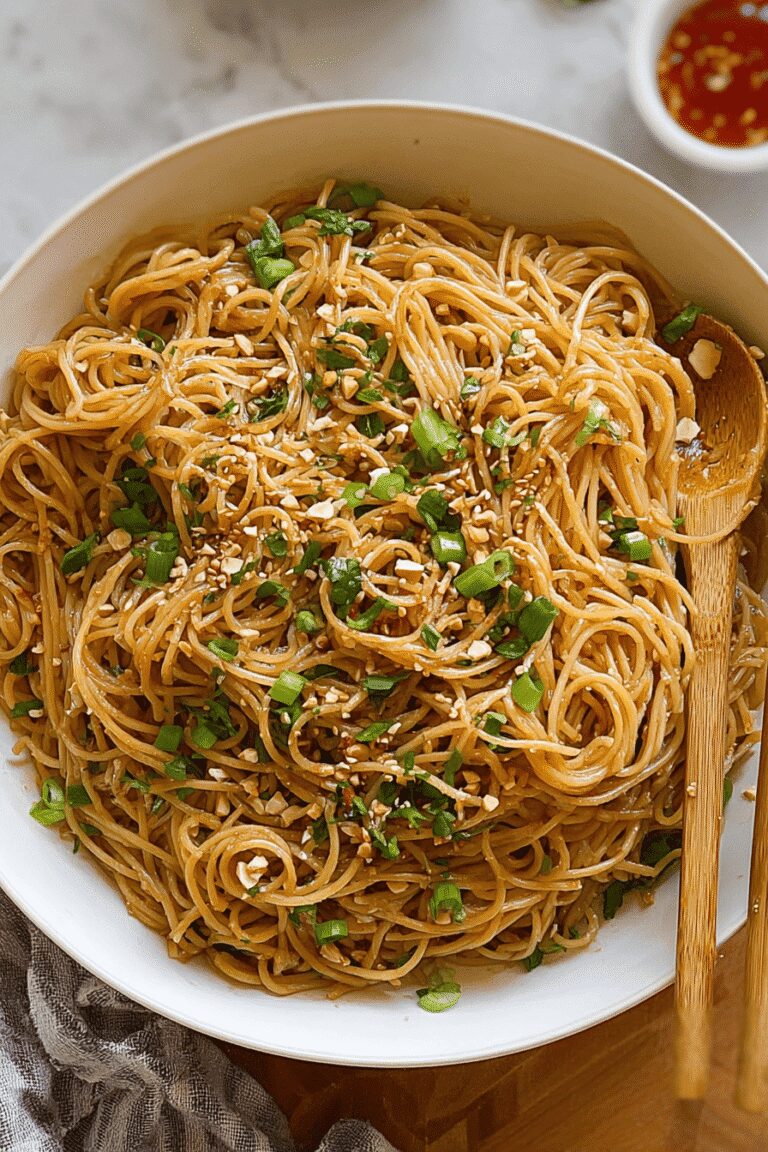
🥢 Enjoy quick and flavorful sesame noodles made with simple ingredients and a delicious peanut sesame dressing.
🌱 This versatile dish can be served as a light side or enhanced into a hearty meal by adding fresh vegetables or shredded chicken.
- Total Time: 15 minutes
- Yield: 4 servings
Ingredients
– 500 g / 1 lb fresh egg noodles
– 3/4 cup green onions, finely sliced
– 1 tablespoon sesame seeds, plus extra for garnish
– 2 to 3 tablespoons crushed peanuts, optional, plus extra for garnish
– 1 ½ tablespoons dark soy sauce
– 1 tablespoon soy sauce
– 1 ½ tablespoons rice vinegar
– 2 tablespoons sesame oil
– 2 teaspoons fresh grated ginger
– 1 garlic clove, minced
– 2 teaspoons white sugar
– 2 tablespoons peanut butter
– 1 tablespoon sesame paste or an alternative like tahini
– 2 teaspoons garlic chili paste, adjusted to taste, optional
Instructions
1-First: cook the noodles according to package instructions, then drain and rinse briefly under cold water to prevent sticking. This step ensures they stay light and ready for the sauce.
2-Next: in a bowl, mix all sauce ingredients until smooth; warm slightly if necessary to help combine, creating that rich, nutty blend.
3-Then: in a large bowl, combine the noodles with the sliced green onions, sauce, sesame seeds, and crushed peanuts if using. Toss everything well to coat each strand evenly.
4-Finally: garnish with additional sesame seeds and serve warm or at room temperature for the best taste.
1-Prepare and cook noodles as directed.
2-Whisk the sauce ingredients together.
3-Toss noodles with sauce and add-ins.
4-Garnish and serve right away.
Last Step:
Please leave a rating and comment letting us know how you liked this recipe! This helps our business to thrive and continue providing free, high-quality recipes for you.Notes
🥢 Fresh noodles provide the best texture and sauce adherence.
🌶 Adjust chili paste to your preferred spice level or substitute with chili flakes.
🥜 Use quality peanut butter and sesame paste (or tahini) for the best flavor.
- Prep Time: 10 minutes
- Cook Time: 5 minutes
- Category: Main Dish / Side Dish
- Method: Boiling and tossing
- Cuisine: Asian-inspired
- Diet: Not specified
Nutrition
- Serving Size: About 89 grams
- Calories: 178 kcal